16 Modern Kitchen Design Ideas for a Stylish Home
A modern kitchen should feel stylish, practical, and comfortable enough for everyday living. Today’s most inspiring designs combine thoughtful storage, durable materials, balanced color palettes, and attractive lighting to create spaces that work beautifully. Whether you are planning a complete renovation or simply searching for decorating inspiration, small design choices can make a major difference. The right cabinetry, surfaces, fixtures, and accessories can transform an ordinary kitchen into a polished and welcoming centerpiece.
Modern kitchen design is not limited to one specific look. It can be warm and organic, sleek and minimal, bold and dramatic, or soft and timeless. The most successful kitchens reflect the homeowner’s lifestyle while maintaining visual balance and efficient organization. These Pinterest-worthy ideas explore practical layouts, popular materials, stylish color combinations, and clever details that can help you create a kitchen that feels fresh, functional, and beautifully connected to the rest of your home.
1. Choose Warm White Cabinets
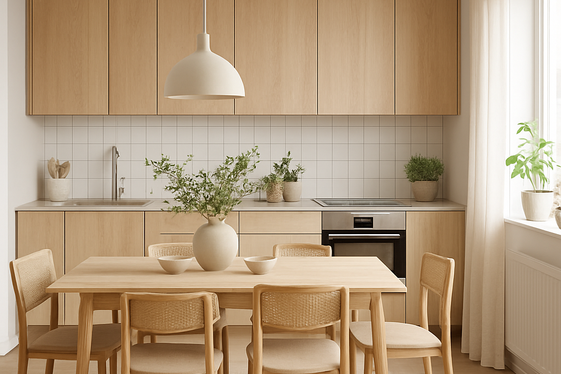
Warm white cabinets create a bright, timeless foundation without the cold appearance that pure white can sometimes produce. Creamy undertones make the kitchen feel softer and more inviting, especially when paired with natural light and warm flooring. This cabinet color works beautifully in small kitchens because it reflects light and creates an open feeling. It also provides a flexible background for different countertop materials, hardware finishes, and decorative styles.
To keep a warm white kitchen from appearing plain, introduce contrast through texture and carefully selected accents. Natural oak stools, veined stone countertops, handmade tiles, or brushed brass handles can add depth and personality. Use soft gray, beige, or muted green accessories to reinforce the calm palette. The result will feel fresh and elegant while remaining easy to update over time as your decorating preferences and household needs change.
2. Add a Large Multifunctional Island
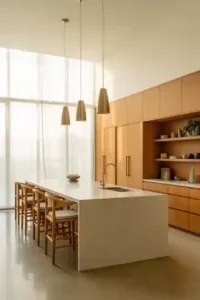
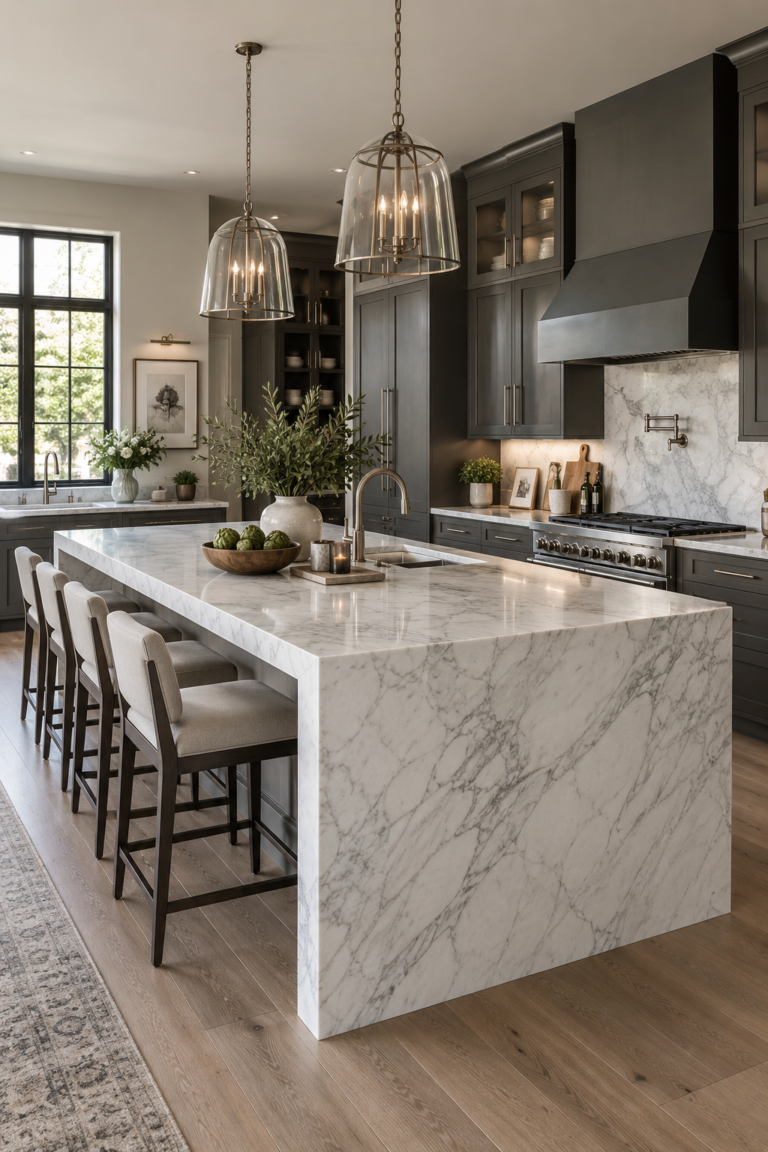
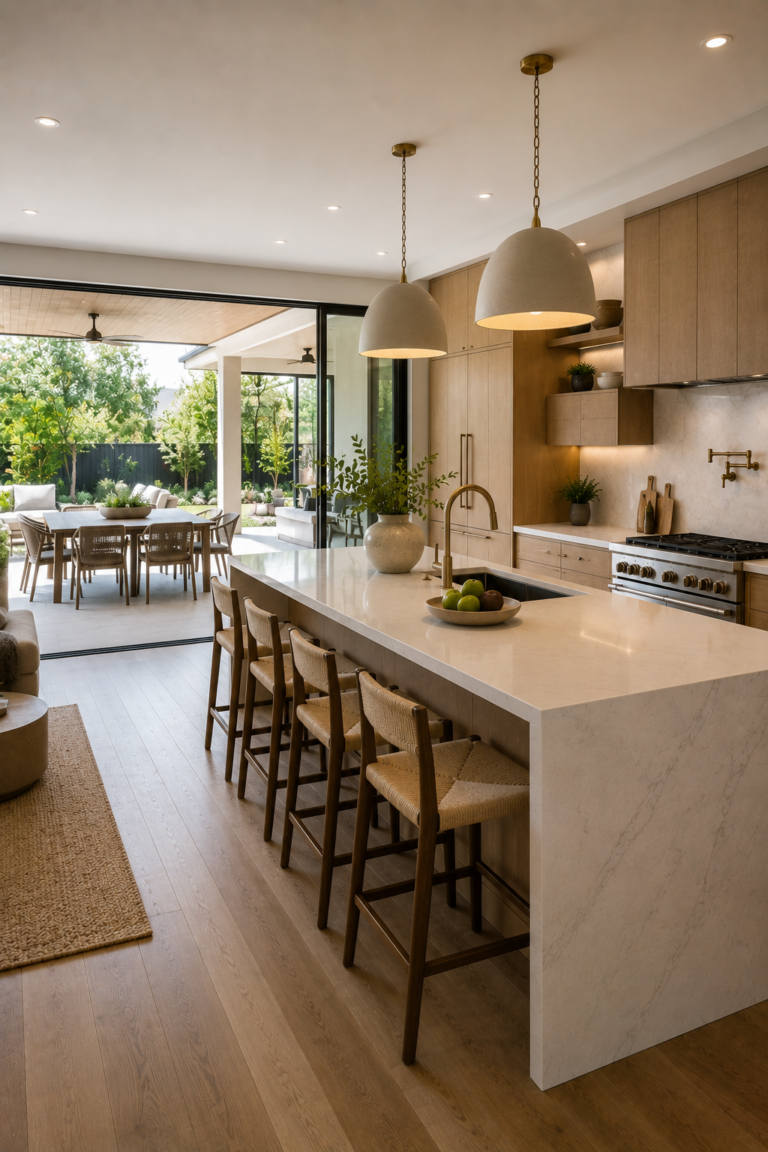
A large kitchen island can become the functional and visual center of the entire room. It provides additional preparation space, storage, seating, and an informal place for meals or conversation. Depending on the layout, the island may also include a sink, cooktop, dishwasher, or built-in electrical outlets. A carefully planned island helps improve workflow while creating a natural gathering point for family members and guests.
Choose proportions that allow comfortable movement around every side, and avoid making the island too large for the available floor space. Waterfall stone edges can create a luxurious contemporary appearance, while wood panels introduce warmth. Add comfortable stools and pendant lighting to define the seating area. Deep drawers, cabinets, and hidden recycling bins can increase practicality, ensuring the island remains attractive while supporting daily cooking, entertaining, and storage needs.
3. Combine Wood and Painted Cabinetry
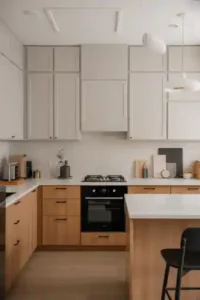
Combining wood cabinetry with painted finishes creates a layered kitchen that feels modern, warm, and visually balanced. Natural oak or walnut can be used on lower cabinets or a central island, while soft white, gray, green, or beige appears on upper cabinetry. This approach introduces contrast without relying on strong colors. It also helps large kitchens feel more interesting and prevents an extensive wall of cabinets from appearing too heavy.
For a cohesive result, repeat both finishes throughout the room rather than isolating them in unrelated areas. A wooden island can connect with flooring or open shelving, while painted cabinetry can coordinate with surrounding walls. Keep countertop and backsplash choices relatively simple so the two cabinet finishes remain the main feature. Matching hardware across all doors and drawers will visually connect the design and create a polished, intentional appearance.
4. Install a Statement Stone Backsplash
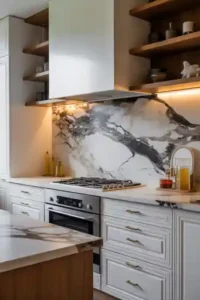
A statement stone backsplash can instantly elevate a modern kitchen and create a luxurious focal point. Marble, quartzite, granite, or porcelain slabs offer natural movement and eliminate the grout lines associated with smaller tiles. Extending the same material from the countertop to the backsplash creates a seamless appearance. Strong veining can add drama, while softer patterns support a calm, understated kitchen with timeless visual appeal.
Because statement stone already provides considerable pattern, keep the surrounding cabinetry and accessories simple. Flat-panel or shaker cabinets in white, beige, charcoal, or natural wood allow the backsplash to remain visually dominant. Install under-cabinet lighting to highlight the veining and improve task visibility. Carefully position electrical outlets so they do not interrupt the most attractive areas of the slab, creating a cleaner and more refined finished result.
5. Use Open Shelving Strategically
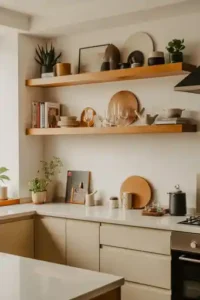
Open shelving can make a kitchen feel lighter while providing convenient access to attractive everyday items. A few floating shelves can display plates, glasses, cookbooks, ceramics, and small plants without requiring another row of upper cabinets. This approach works especially well in compact kitchens or above coffee stations. Natural wood shelves also introduce warmth and texture, helping smooth painted surfaces and stone countertops feel more relaxed and inviting.
The key is to use open shelves selectively rather than replacing every closed cabinet. Display items that share similar colors and shapes, and leave enough empty space for the arrangement to breathe. Frequently used dishes are practical because they will not collect dust for long periods. Conceal less attractive packaging and appliances behind cabinet doors. With thoughtful styling, open shelves can feel organized, personal, and visually balanced instead of cluttered.
6. Introduce Matte Black Accents
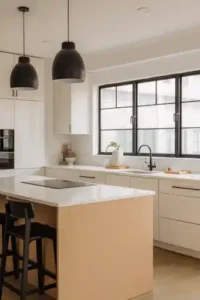
Matte black accents add definition and contemporary contrast without requiring a dark kitchen. Faucets, cabinet handles, window frames, pendant lights, and bar stools can introduce small areas of black that visually anchor lighter surfaces. This finish works particularly well with white, beige, gray, and natural wood palettes. Because matte black has a clean and graphic appearance, it can make even simple cabinetry feel more intentional and professionally coordinated.
Avoid using black on every available feature, especially in small kitchens with limited natural light. Select a few repeated elements and allow softer materials to balance the contrast. A black faucet can connect with pendant lights, while slim cabinet handles repeat the finish subtly. Warm timber, woven seating, and creamy stone can prevent the design from feeling harsh. The finished kitchen will appear crisp, modern, and visually structured.
7. Create a Hidden Appliance Wall
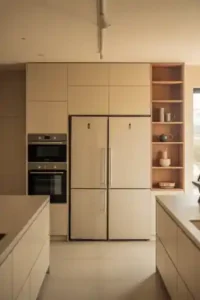
A hidden appliance wall creates a seamless and uncluttered appearance by integrating refrigerators, dishwashers, coffee machines, and storage behind coordinated cabinetry. Floor-to-ceiling panels help large appliances blend into the architecture instead of interrupting the visual flow. This design is especially effective in open-plan homes, where the kitchen is constantly visible from living and dining areas. Concealed appliances allow the room to feel more like a refined interior than a purely functional workspace.
Careful planning is essential because ventilation, door clearance, and access requirements must be considered during installation. Use matching panels for major appliances and include tall cupboards for pantry items, cleaning tools, or small machines. Handleless doors support a minimalist look, although slim pulls can add subtle detail. The result is a calm, organized kitchen where practical equipment remains accessible without visually dominating the room.
8. Decorate With Soft Green Cabinetry
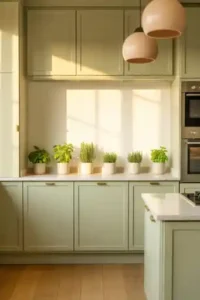
Soft green cabinetry brings color into a kitchen while remaining calm, natural, and easy to coordinate. Sage, eucalyptus, olive, and muted moss tones work beautifully with warm whites, natural stone, and timber. Green can be used throughout the cabinetry or limited to an island for a more subtle effect. These shades create a connection with nature and can make the kitchen feel peaceful, fresh, and welcoming throughout the year.
Pair soft green cabinets with brass or bronze hardware to emphasize their warm undertones. White quartz, pale marble, and handmade cream tiles can keep the room bright, while oak flooring introduces additional texture. Avoid combining the cabinetry with too many competing colors. Instead, repeat green through herbs, artwork, or textiles. The final design will feel distinctive and modern without becoming overly bold or difficult to decorate.
9. Add Sculptural Pendant Lighting
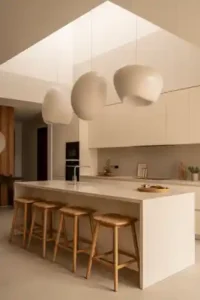
Sculptural pendant lights can transform a kitchen island into a strong visual centerpiece. Oversized glass, ceramic, metal, or woven fixtures introduce shape and personality while providing important task lighting. A single large pendant may suit a smaller island, while two or three coordinated fixtures can emphasize a longer surface. The lighting design should complement the kitchen’s overall style without obstructing views or making the room feel visually crowded.
Hang pendants at a height that provides illumination without interfering with conversation or movement. Dimmable bulbs allow the kitchen to shift from bright food preparation to softer evening entertaining. Repeat the fixture’s finish through cabinet hardware or seating details for visual consistency. Even a simple kitchen can feel customized when the lighting has a distinctive form, balanced proportions, and a warm, flattering glow.
10. Design a Dedicated Coffee Station
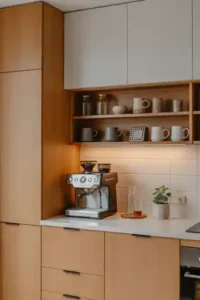
A dedicated coffee station keeps frequently used appliances and supplies organized while creating an attractive daily ritual space. Position it inside a cabinet, in a recessed niche, or along a smaller section of countertop away from the main cooking area. Include storage for mugs, coffee beans, tea, syrups, and accessories. A compact shelf or rail can keep essentials visible without allowing the station to become cluttered.
Use materials that connect the coffee area with the surrounding kitchen, such as matching cabinetry, hardware, and countertops. Add under-shelf lighting to make early mornings more convenient and visually appealing. A small tray can group jars and tools, while one plant or framed print adds personality. When carefully planned, the station reduces congestion around the main work zones and turns an ordinary corner into a stylish, functional feature.
11. Select Fluted Cabinet Details
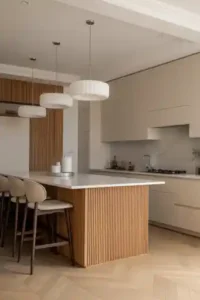
Fluted cabinetry adds texture and architectural character without introducing busy patterns or strong colors. Vertical grooves can appear on an island, cabinet doors, pantry panels, or decorative end sections. Natural wood fluting creates warmth, while painted designs offer a more subtle monochromatic effect. The repeating lines produce gentle shadows and make flat surfaces feel more detailed, giving a modern kitchen a customized, high-end appearance.
Use fluting on one focal area rather than across every cabinet, because excessive texture can reduce the design’s clean quality. A fluted island pairs beautifully with smooth surrounding cabinetry and simple stone countertops. Integrated lighting can emphasize the vertical detail during the evening. Choose practical finishes that are easy to maintain, especially near food preparation zones. The final effect will feel refined, tactile, and visually distinctive.
12. Create a Minimalist Handleless Kitchen
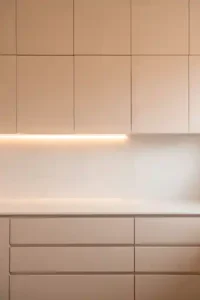
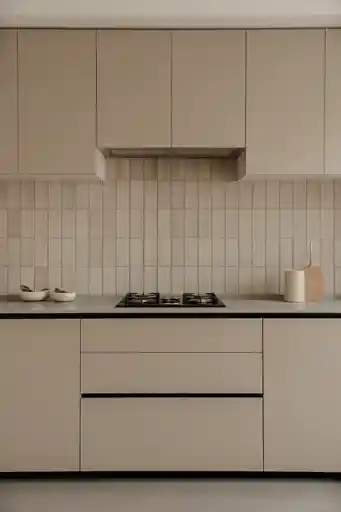
Handleless cabinetry creates a smooth, streamlined appearance that is ideal for modern and minimalist kitchens. Push-to-open mechanisms, recessed channels, or integrated edge pulls eliminate visual interruptions across cabinet fronts. This approach makes the room feel larger and calmer, particularly when cabinets extend from floor to ceiling. Flat-panel doors in white, gray, beige, or wood finishes reinforce the clean architectural quality and allow countertops and lighting to receive more attention.
Minimalist kitchens require excellent storage because clear surfaces are essential to the overall appearance. Plan deep drawers, appliance garages, pantry pullouts, and internal organizers to keep everyday objects hidden but accessible. Use under-cabinet lighting and warm materials to prevent the room from feeling overly clinical. When function is carefully considered, a handleless kitchen can remain practical for daily life while maintaining a polished and uncluttered visual identity.
13. Mix Metals With Intention
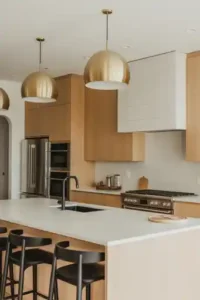
Mixing metal finishes can make a kitchen feel layered and thoughtfully designed when the combination is carefully controlled. Brushed brass, matte black, polished chrome, and stainless steel can work together instead of requiring every fixture to match perfectly. Choose one dominant metal for major elements and use a second finish as an accent. This approach creates depth and prevents the room from looking overly coordinated or similar to a showroom display.
For example, stainless steel appliances can remain practical while brass pendant lights add warmth and a black faucet creates contrast. Repeat each finish at least twice so no element feels accidental. Consider the undertones of cabinetry and stone when selecting metals. Warm woods pair naturally with brass, while cooler gray kitchens suit chrome and black. A balanced combination will feel sophisticated, modern, and visually connected throughout the space.
14. Add a Built-In Breakfast Nook
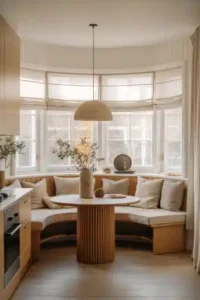
A built-in breakfast nook makes efficient use of an unused corner while creating a comfortable place for casual meals, conversation, or working from home. Bench seating can follow one or two walls, providing more seats than separate chairs within the same footprint. Storage drawers beneath the bench add valuable functionality. A round or oval table makes movement easier and helps the arrangement feel softer within a kitchen filled with straight cabinet lines.
Choose durable upholstery and washable cushions that can handle everyday use. Repeat colors from the kitchen through fabrics, artwork, or lighting so the nook feels connected rather than separate. A pendant light positioned above the table will define the area, while nearby windows can provide beautiful natural light. This feature adds warmth and personality, turning the kitchen into a more welcoming and versatile family space.
15. Use Large-Format Flooring

Large-format tiles create a cleaner visual surface by reducing the number of visible grout lines across the kitchen floor. Porcelain tiles that resemble limestone, concrete, marble, or terrazzo can provide durability while supporting a modern design. Larger tiles also help compact kitchens appear more spacious because the floor looks less divided. Neutral shades are especially practical because they coordinate easily with changing cabinet colors, furniture, and decorative accessories.
Select a slip-resistant finish and a grout color that blends closely with the tile for a seamless appearance. Proper installation is important because large tiles require a level subfloor and precise alignment. Continue the same flooring into adjacent dining or living areas to strengthen visual flow in an open-plan home. The result will feel calm, expansive, and sophisticated while remaining suitable for frequent traffic and everyday kitchen maintenance.
16. Bring in Plants and Fresh Herbs
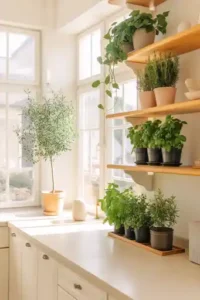
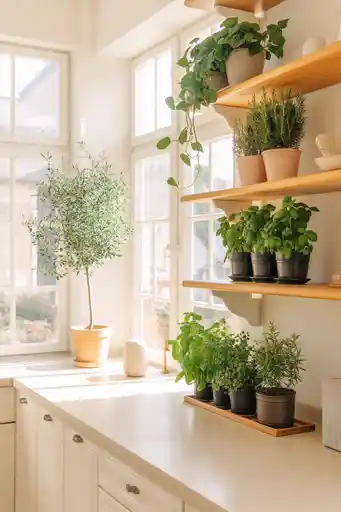
Plants and fresh herbs introduce natural color and softness into a kitchen filled with hard surfaces. Small pots of basil, mint, rosemary, or thyme can sit near a sunny window, while trailing plants work beautifully on open shelves. A larger floor plant can fill an empty corner in a spacious kitchen. Greenery creates a fresh, lived-in atmosphere and complements popular materials such as wood, stone, ceramic, and woven fibers.
Choose plants that suit the available light and keep them away from excessive heat or cooking splashes. Use coordinated pots in terracotta, white ceramic, or neutral stone to avoid creating visual clutter. Herbs are particularly practical because they can be used during meal preparation. By repeating greenery in a few carefully selected areas, you can make the kitchen feel healthier, warmer, and more connected to nature without changing any permanent design features.