15 Afrohemian Living Room Ideas with Bold Personality
Afrohemian living rooms combine the relaxed, layered spirit of bohemian design with the rich colors, craftsmanship, patterns, and natural materials associated with African-inspired interiors. The result is expressive, welcoming, and deeply personal rather than perfectly matched. Warm earth tones, woven textures, meaningful artwork, carved wood, and greenery work together to create a room that feels collected over time while still maintaining a clear and intentional visual direction.
The key to this style is thoughtful layering rather than filling every surface with decoration. Each textile, basket, sculpture, or piece of art should contribute texture, history, or character to the room. Whether you prefer a calm neutral foundation or a vibrant palette filled with ochre, rust, green, and indigo, these Afrohemian living room ideas will help you create a bold, comfortable, and Pinterest-worthy space with genuine personality.
1. Build the Room Around Warm Earth Tones
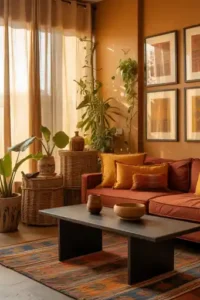
Warm earth tones create a grounding foundation for an Afrohemian living room and immediately make the space feel inviting. Terracotta, clay, rust, ochre, caramel, and deep brown can appear across walls, upholstery, rugs, and accessories. These shades reflect natural landscapes and complement handcrafted materials beautifully. Begin with one dominant warm neutral, then layer richer accents gradually so the room feels visually expressive without becoming excessively busy or difficult to coordinate.
Introduce contrast with cream textiles, black details, and fresh greenery to keep the warm palette balanced. A rust-colored sofa can be paired with neutral curtains, patterned cushions, and a dark wood table for depth. Handmade pottery and woven baskets will reinforce the earthy character. Using several related shades instead of one exact color creates a more natural, collected appearance and gives the living room the layered personality associated with Afrohemian interiors.
2. Layer African-Inspired Patterned Textiles
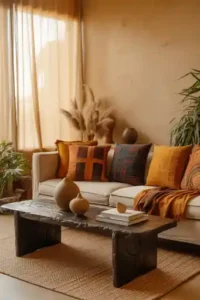
Patterned textiles are essential for introducing rhythm, movement, and visual storytelling into an Afrohemian living room. Use mud cloth-inspired cushions, geometric throws, woven fabrics, and block-printed upholstery to create a richly layered effect. Black, cream, rust, indigo, and mustard patterns can work together when they share similar undertones. Mixing different scales, such as large geometric designs with smaller repeated motifs, will keep the arrangement interesting and balanced.
Avoid covering every surface with strong pattern because quieter areas help detailed textiles receive more attention. Place patterned cushions on a simple linen sofa, add one expressive throw, and ground the arrangement with a textured rug. Choose ethically sourced or artisan-made pieces whenever possible and learn about their origin. This thoughtful approach creates a more meaningful room while celebrating craftsmanship instead of using cultural patterns as purely decorative trends.
3. Add Sculptural Carved Wood Furniture
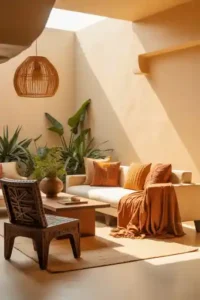
Carved wood furniture introduces craftsmanship, warmth, and strong visual character into an Afrohemian living room. A sculptural side table, hand-carved chair, low coffee table, or decorative stool can become a distinctive focal point. Choose pieces with visible grain, organic edges, or geometric detailing rather than perfectly polished mass-produced surfaces. Dark woods feel dramatic and grounded, while lighter unfinished timber creates a softer, more relaxed bohemian atmosphere.
Allow carved furniture enough space to be appreciated instead of surrounding it with too many competing objects. Pair a detailed wooden chair with a plain cushion, or style a carved table with one ceramic bowl and a few books. Repeat the wood tone through picture frames, shelving, or smaller accessories to create cohesion. These handcrafted elements bring depth and individuality, making the living room feel personal, timeless, and connected to traditional making techniques.
4. Create a Bold African Art Gallery Wall
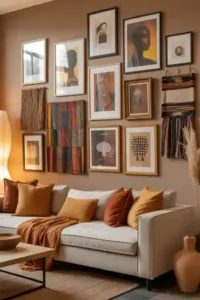
A gallery wall filled with African and African diaspora art can give the living room a strong sense of identity and creative energy. Combine contemporary prints, expressive portraits, abstract paintings, photography, and small woven pieces in a thoughtfully arranged composition. Select artwork that genuinely connects with your interests or experiences rather than choosing images only because they match the furniture. This creates a display that feels personal, respectful, and visually memorable.
Use frames in black, natural wood, brass, or dark brown to connect different pieces without making everything identical. Arrange the collection on the floor before hanging it, maintaining comfortable spacing around each work. A neutral wall allows colorful artwork to stand out, while a deep painted background creates a dramatic effect. Keep nearby furniture relatively simple so the gallery remains the main attraction and does not compete with excessive decorative accessories.
5. Introduce Woven Baskets as Wall Decor
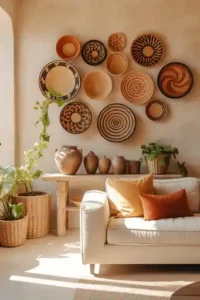
A collection of woven baskets can transform a blank living room wall into a textured and artistic focal point. Arrange baskets in different sizes, weaving patterns, and natural shades to create movement while maintaining a cohesive organic palette. Round forms soften the straight lines of sofas, shelves, and windows, making the room feel more relaxed. Handwoven pieces also introduce visible craftsmanship and subtle variation that printed wall decor cannot easily replicate.
Begin with one larger basket, then build the arrangement outward using smaller designs. Leave enough space between pieces so each pattern remains visible and the display does not feel crowded. Natural tan, black, rust, and cream baskets work particularly well against white, clay, or deep green walls. Position the collection above a console or sofa, then keep the surface below simply styled with pottery, books, and a plant.
6. Mix Indigo with Terracotta and Cream
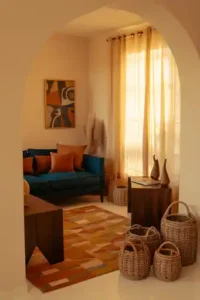
Indigo, terracotta, and cream create a striking Afrohemian color palette that feels bold yet balanced. Indigo introduces depth and cool contrast, terracotta provides warmth, and cream prevents the room from becoming visually heavy. Use one color as the main feature and allow the others to support it. An indigo sofa, for example, can be softened with cream curtains, rust-colored cushions, and a warm patterned rug.
Repeat each shade in several areas to make the palette feel intentional. Indigo can appear in artwork and textiles, while terracotta returns through pottery and smaller accessories. Dark wood furniture will anchor the colors, and greenery will provide a fresh natural accent. This combination works especially well in rooms with strong daylight because the rich pigments remain vibrant while the cream surfaces reflect enough light to preserve openness.
7. Style a Statement Mud Cloth Sofa
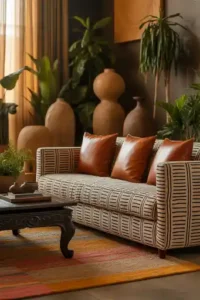
A mud cloth-inspired sofa can become the central design feature of an Afrohemian living room. Black-and-cream geometric patterns create strong visual contrast while remaining versatile enough to pair with warm wood, leather, and earthy accessories. Choose full patterned upholstery for a dramatic statement or use a plain sofa with several authentic mud cloth cushions for a more flexible approach. Either option adds graphic energy without relying on bright colors.
Balance the strong pattern with quieter surrounding surfaces, such as cream walls, simple curtains, and a solid-colored rug. Caramel leather cushions, a carved wooden coffee table, and terracotta pottery can introduce warmth. Avoid mixing too many unrelated patterns directly beside the sofa. Instead, repeat one or two geometric elements elsewhere in the room through artwork or baskets, helping the design feel layered, coordinated, and thoughtfully composed.
8. Bring in Oversized Tropical Greenery
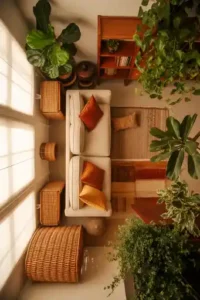
Large tropical plants bring energy, movement, and natural softness into an Afrohemian living room. Bird of paradise, fiddle-leaf fig, monstera, palms, and rubber plants can fill empty corners while balancing strong patterns and heavy wooden furniture. Their sculptural leaves create an immediate connection with nature and make the room feel more vibrant. Use woven baskets, clay pots, or textured planters to integrate greenery into the broader decorating scheme.
Choose one or two oversized plants rather than filling every surface with small pots. A tall plant beside the sofa can frame the seating area, while trailing greenery adds softness to shelves. Consider the room’s natural light and select varieties that will remain healthy in those conditions. Realistic artificial plants can be used in darker areas. Greenery provides a refreshing visual break and helps layered Afrohemian decor feel breathable rather than crowded.
9. Add a Low-Slung Conversation Area

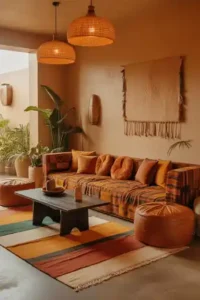
Low-slung seating creates a relaxed and intimate atmosphere that suits the welcoming character of Afrohemian design. Combine a low sofa with floor cushions, woven poufs, or compact stools arranged around a central coffee table. This layout encourages conversation and gives the room a casual, collected quality. Choose comfortable fabrics and warm colors so the seating feels inviting rather than overly formal or designed only for appearance.
Ground the conversation area with a generously sized rug that connects every seat visually. A carved or solid wood coffee table can provide a strong center, while trays help keep floor-level accessories organized. Layer cushions in different textures but maintain a coordinated palette. This arrangement works particularly well in spacious living rooms or informal family areas where comfort, social connection, and flexible seating are more important than traditional furniture layouts.
10. Use Dramatic Black Walls as a Backdrop
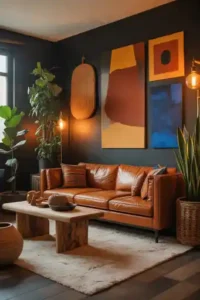
Black walls create a powerful backdrop that allows warm wood, woven textures, metallic details, and colorful artwork to stand out. In an Afrohemian living room, a dark wall can make the space feel intimate, artistic, and sophisticated rather than cold. Use matte or chalky finishes to soften the effect. One statement wall may be sufficient in smaller rooms, while larger spaces can support a more immersive dark color scheme.
Balance black surfaces with cream upholstery, light rugs, and warm lighting so the room remains comfortable. Caramel leather, terracotta pottery, and golden wood tones look especially rich against a dark background. Large artwork and woven basket displays will become more visually prominent. Add plants to introduce freshness and prevent the palette from feeling too heavy. The completed room will have a bold, gallery-like presence with warmth and personality.
11. Incorporate Handmade Pottery and Clay Decor
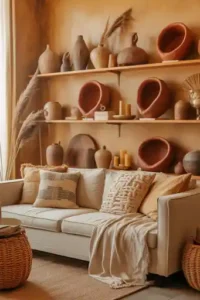
Handmade pottery brings organic shape, earthy color, and visible craftsmanship into an Afrohemian living room. Display clay vessels, sculptural bowls, ceramic candleholders, or textured planters on shelves, consoles, and coffee tables. Slight imperfections and natural variations make each piece feel unique. Terracotta, black, cream, and deep brown pottery can easily coordinate with woven textiles, wooden furniture, and warm neutral walls without making the room appear overly decorated.
Group pottery in odd numbers and vary the height and shape of each piece for a balanced arrangement. One large vessel can create more impact than several tiny objects, especially on a floor or wide console. Leave open space around handmade pieces so their form and surface can be appreciated. Combining pottery with books, dried branches, or greenery creates a simple but expressive display that reinforces the room’s grounded and artistic character.
12. Layer Rugs with Global Patterns
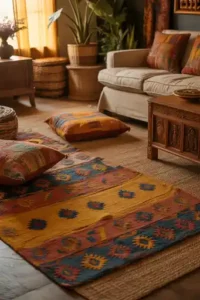
Layered rugs add warmth, softness, and visual depth while helping define the seating area. Begin with a large natural jute or sisal rug, then place a smaller patterned rug on top. Geometric, striped, or handwoven designs can introduce color without dominating the entire floor. This method works particularly well in large living rooms, where a single rug may not provide enough texture or clearly connect all the furniture.
Keep the bottom rug neutral and allow the upper layer to introduce stronger pattern or color. Make sure both rugs lie flat and use suitable pads to prevent movement. The edges do not need to align perfectly, as slight asymmetry supports the relaxed bohemian atmosphere. Repeat one color from the top rug through cushions or artwork so the layering feels intentional and connected to the rest of the room.
13. Add Metallic Accents in Brass and Bronze
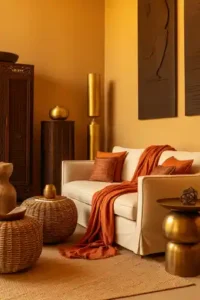
Brass and bronze accents introduce warmth and subtle shine into an Afrohemian living room. These metals complement terracotta, black, olive, indigo, and natural wood particularly well. Use them through floor lamps, side tables, trays, mirror frames, candleholders, or small sculptures. A few metallic surfaces can reflect light and lift an earthy palette without making the space feel overly glamorous or disconnected from its handcrafted character.
Choose aged, brushed, or hammered finishes instead of highly polished metal for a softer and more collected look. Repeat the finish in two or three places so it feels deliberate, but avoid matching every fixture exactly. Brass lighting can coordinate with a bronze bowl or antique-style frame. When balanced with woven materials and matte pottery, metallic details create richness while preserving the warm, grounded personality of the room.
14. Create a Cozy Reading Corner
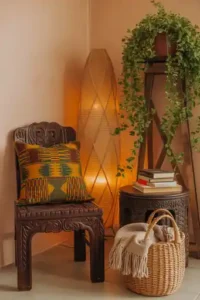
A cozy reading corner adds function and personality to an unused section of the living room. Place a carved wood chair, upholstered accent seat, or woven lounge chair beside a small table and soft floor lamp. Add a patterned cushion, textured throw, and basket for books or magazines. This compact arrangement creates a private retreat while contributing another beautifully layered moment to the overall Afrohemian design.
Position the chair near natural light when possible and use warm evening lighting for comfort after sunset. A small rug can define the corner without separating it completely from the main seating area. Add one piece of artwork or a trailing plant above the chair to complete the composition. Keeping the arrangement practical and uncluttered ensures the space feels genuinely usable rather than simply styled for decoration or photography.
15. Display Meaningful Objects and Collected Treasures
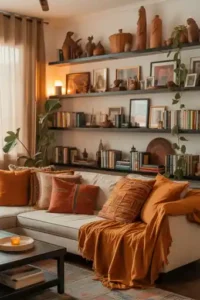
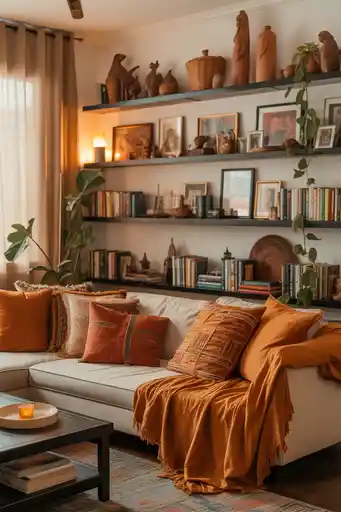
An Afrohemian living room feels most authentic when it includes objects with personal meaning. Display travel finds, inherited pieces, family photographs, handmade sculptures, books, musical instruments, or artwork collected over time. These details give the room an individual story that cannot be recreated through trend-driven shopping alone. Combining old and new items also creates the relaxed, evolving character that makes bohemian interiors feel comfortable and emotionally connected.
Arrange meaningful objects thoughtfully instead of displaying everything at once. Group pieces by color, material, or shared history, and leave enough open space to prevent shelves from appearing cluttered. Rotate collections seasonally so different items receive attention. Use simple shelves, cabinets, or consoles as quiet backgrounds for the display. The finished living room will feel distinctive, expressive, and deeply personal while still maintaining a polished and intentional visual balance.