14 Black and White Living Room Ideas That Never Go Out of Style
Black and white living rooms have a timeless appeal because they combine crisp contrast with endless decorating flexibility. Whether your home leans modern, traditional, minimalist, or glamorous, this classic palette creates a polished foundation that is easy to personalize. By balancing dark statement pieces with bright surfaces, soft textures, and thoughtful accents, you can design a room that feels sophisticated without becoming cold, stark, overly formal, or unsuitable for everyday living.
The key to decorating successfully with black and white is thoughtful layering. Different materials, patterns, finishes, and shades keep the space visually interesting while preserving its clean appearance. From bold striped rugs and dramatic black walls to white sofas, natural wood, and metallic details, these ideas show how to create a stylish living room that feels inviting, balanced, and relevant for years rather than just one passing short-lived decorating season.
1. Pair a White Sofa With Black Accent Chairs
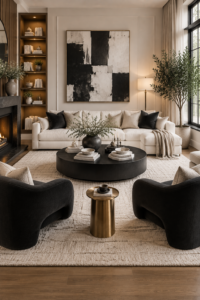
A white sofa instantly brightens a living room and creates a clean focal point, while black accent chairs add structure and visual weight. This combination works especially well in open spaces because the contrasting furniture defines the seating area without making it feel crowded. Choose chairs with slim metal frames or sculptural silhouettes to keep the arrangement elegant, then connect both colors through coordinated cushions, artwork, and a patterned rug.
To make the room more comfortable, introduce soft textures such as boucle, linen, velvet, or knitted throws. A black coffee table can anchor the center, while white curtains allow natural light to soften the contrast. Small touches of warm wood, brass, or greenery prevent the palette from feeling too rigid. The finished space looks refined and editorial, yet still practical enough for everyday conversation, reading, entertaining, and relaxed family time.
2. Create Drama With a Matte Black Feature Wall
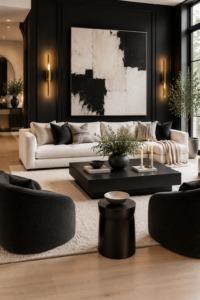
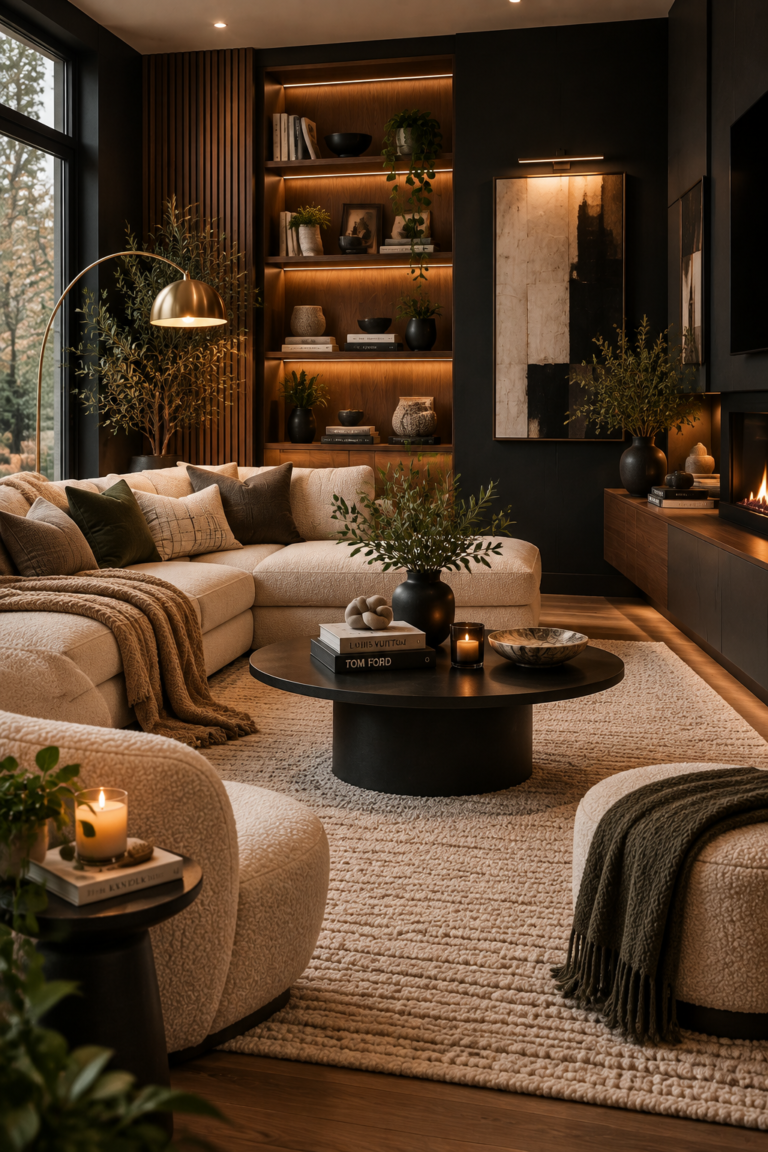
A matte black feature wall gives a living room instant depth and turns an ordinary backdrop into a dramatic design statement. Place it behind the sofa, fireplace, or television to create a clear focal point. Because matte finishes absorb light, they feel softer and more sophisticated than glossy black paint. Balance the dark wall with white upholstery, pale flooring, or large windows so the room remains open, comfortable, and visually balanced.
Decorate the wall with oversized white artwork, a light stone fireplace, or floating shelves styled with monochrome accessories. Warm lighting is essential, so include wall sconces, table lamps, or a sculptural floor lamp that casts a gentle glow. Textured fabrics and natural materials add dimension against the flat background. This approach is ideal for homeowners who want a bold look without redesigning the entire room or investing in expensive furniture.
3. Layer Black and White Geometric Patterns
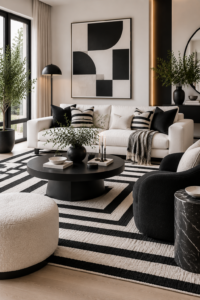
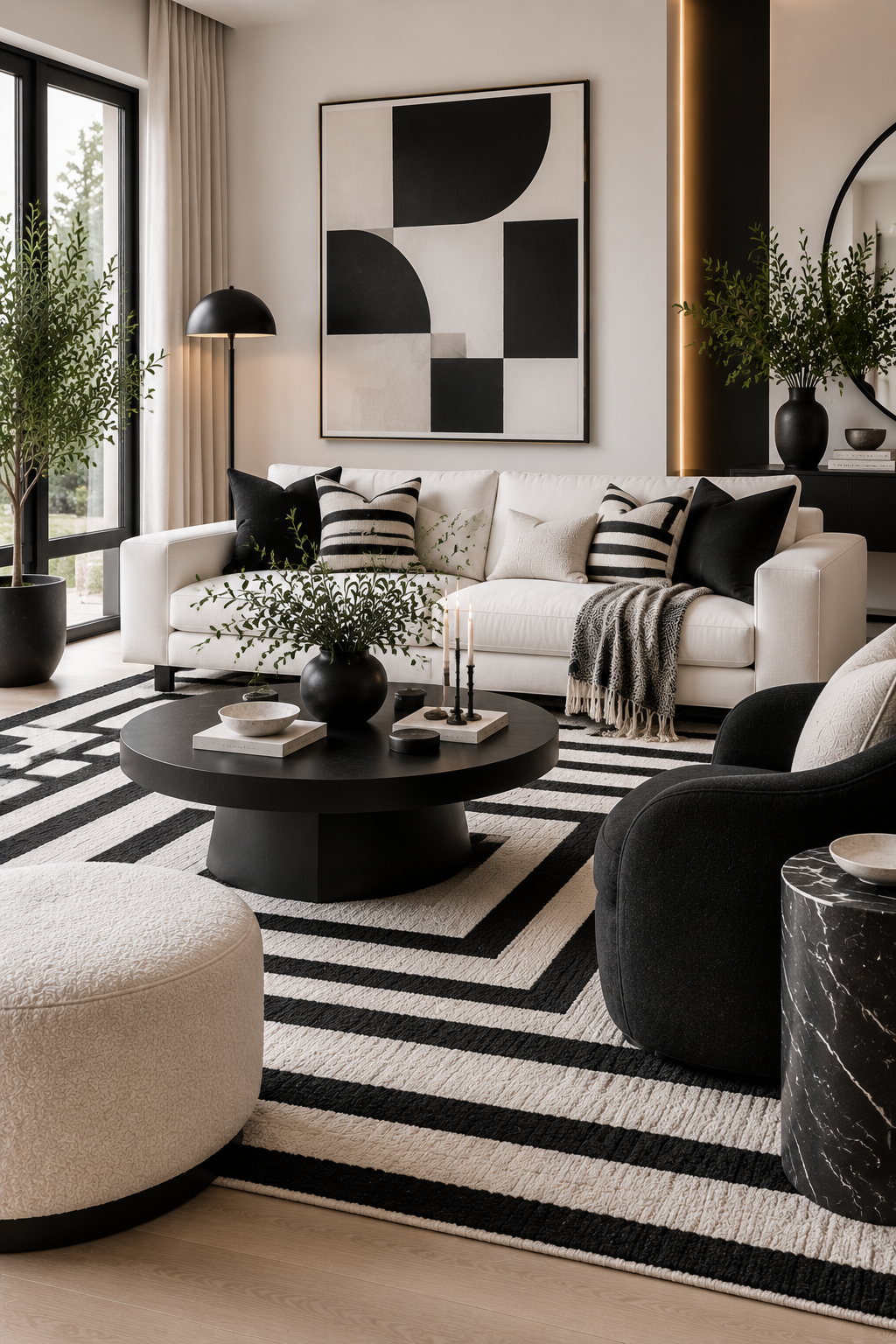
Geometric patterns add energy to a black and white living room while keeping the color scheme controlled and cohesive. Start with one dominant pattern, such as a striped rug, checkerboard ottoman, or angular wallpaper, then repeat smaller shapes through pillows and artwork. Varying the scale of each print prevents the room from looking overly busy. Keep major furniture pieces simple so the patterns remain stylish rather than competing for attention.
For a polished result, mix straight lines with softer shapes. A round coffee table, curved sofa, or circular mirror can balance sharp stripes and grids. Solid black and white areas should also be included to give the eye places to rest. Add subtle gray, cream, or natural wood accents when needed. The result feels graphic, youthful, and Pinterest-worthy while still maintaining the timeless elegance associated with beautifully designed monochrome interiors.
4. Warm the Palette With Natural Wood
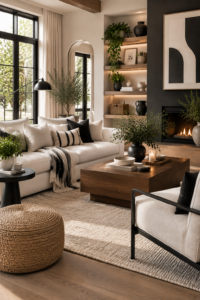
Natural wood is one of the easiest ways to make a black and white living room feel warmer and more welcoming. A walnut coffee table, oak shelving unit, or reclaimed wood console introduces organic color without distracting from the monochrome theme. The grain and texture soften sharp contrasts, helping the room feel relaxed rather than formal. Choose one or two wood tones and repeat them consistently for a coordinated, intentional appearance.
Pair medium or light wood with black metal details and white upholstery for a modern balanced look. Woven baskets, wooden picture frames, and a textured side table can extend the warmth across the room. Avoid adding too many competing finishes, which may weaken the clean aesthetic. This combination is especially effective in Scandinavian, modern farmhouse, and transitional spaces where comfort, simplicity, and timeless materials are equally important to the overall design.
5. Style a Black Fireplace Against White Walls
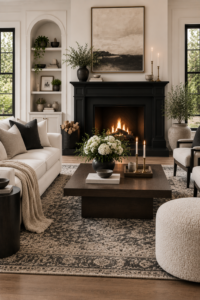
A black fireplace becomes a striking architectural centerpiece when surrounded by crisp white walls. Whether the fireplace is painted brick, stone, metal, or plaster, the dark finish creates contrast and draws attention to the heart of the room. Keep the mantel simple with a large mirror, abstract artwork, or a few balanced accessories. The white background ensures the feature feels bold without making the overall living room appear smaller or heavier.
Arrange furniture to emphasize the fireplace, using a white or cream sofa and black side tables to repeat the palette. A textured rug in ivory and charcoal can visually connect the seating area. For additional warmth, display natural logs, brass candleholders, or ceramic pieces with handmade finishes. This idea works beautifully in both traditional homes and contemporary interiors because the strong contrast highlights architectural character while remaining clean, versatile, and easy to update.
6. Choose a Black and White Gallery Wall
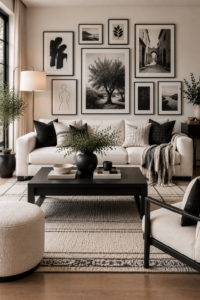
A black and white gallery wall adds personality without introducing colors that interrupt the room’s cohesive palette. Combine photography, line drawings, typography, and abstract prints in black, white, and soft gray tones. Matching black frames create a clean modern arrangement, while mixed black and white frames feel more relaxed. Plan the layout on the floor before hanging everything, maintaining even spacing so the display looks intentional rather than randomly assembled.
Place the gallery above a sofa, console, or reading corner where it can become a strong visual feature. Include different frame sizes to create movement, but repeat similar tones and styles for unity. A picture light or nearby floor lamp can highlight the artwork in the evening. This approach allows you to display travel memories, family photographs, or favorite prints while preserving the sophisticated simplicity of a timeless monochrome living room.
7. Add Softness With Boucle and Linen
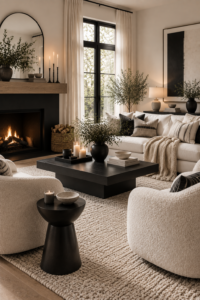
Black and white rooms can sometimes feel visually sharp, so tactile fabrics are essential for creating softness. A white boucle chair, linen sofa, or nubby wool rug adds depth even when the colors remain neutral. These materials reflect light differently, making the room feel layered and luxurious. Pair them with smooth black finishes, such as a metal lamp or lacquered side table, to create an appealing contrast between soft and structured surfaces.
Continue the cozy effect with oversized cushions, a lightweight throw, and floor-length curtains that gently filter sunlight. Avoid using only pure white; ivory, oatmeal, and warm gray can be included while still supporting the black and white theme. These subtle variations make the room feel more livable and forgiving. The finished space appears high-end and carefully styled, but it also invites guests to sit down, relax, and stay comfortably awhile.
8. Use a Checkerboard Rug as the Focal Point
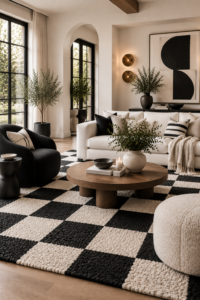
A checkerboard rug brings playful vintage character to a black and white living room while serving as a strong visual anchor. Large squares create a bold graphic statement, whereas smaller checks offer a more subtle pattern. Position the rug beneath the main seating arrangement and allow enough space for the front legs of the furniture to rest on it. Keep surrounding upholstery mostly solid so the floor remains the room’s defining feature.
To prevent the checkerboard pattern from feeling harsh, choose a rug with slightly softened black, cream, or textured fibers rather than a perfectly sharp printed design. Curved furniture and warm wooden accents can also balance its structured geometry. Add minimal accessories and repeat the pattern only once or twice in smaller details. This combination feels fresh, artistic, and slightly retro while retaining the classic appeal that makes black and white decorating so enduring.
9. Mix Modern Furniture With Vintage Details
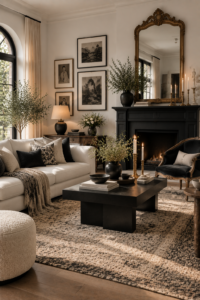
Combining modern furniture with vintage accessories gives a black and white living room character and prevents it from resembling a showroom. Start with a streamlined sofa, simple coffee table, and contemporary lighting, then add an antique mirror, vintage side chair, or old black-and-white photographs. The contrast between new and aged pieces creates visual history. Keeping everything within the monochrome palette helps different eras feel connected, coordinated, and naturally harmonious together.
Look for vintage pieces with interesting shapes, worn finishes, or decorative details that stand out against clean modern lines. A traditional black cabinet can look striking beside a white modular sofa, while an ornate frame adds elegance above a minimalist console. Use restraint so each older piece receives attention. This thoughtful blend makes the room feel collected over time, offering a more personal and lasting style than a space furnished entirely from one collection.
10. Introduce Subtle Luxury With Metallic Accents
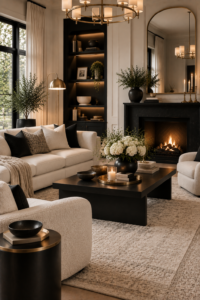
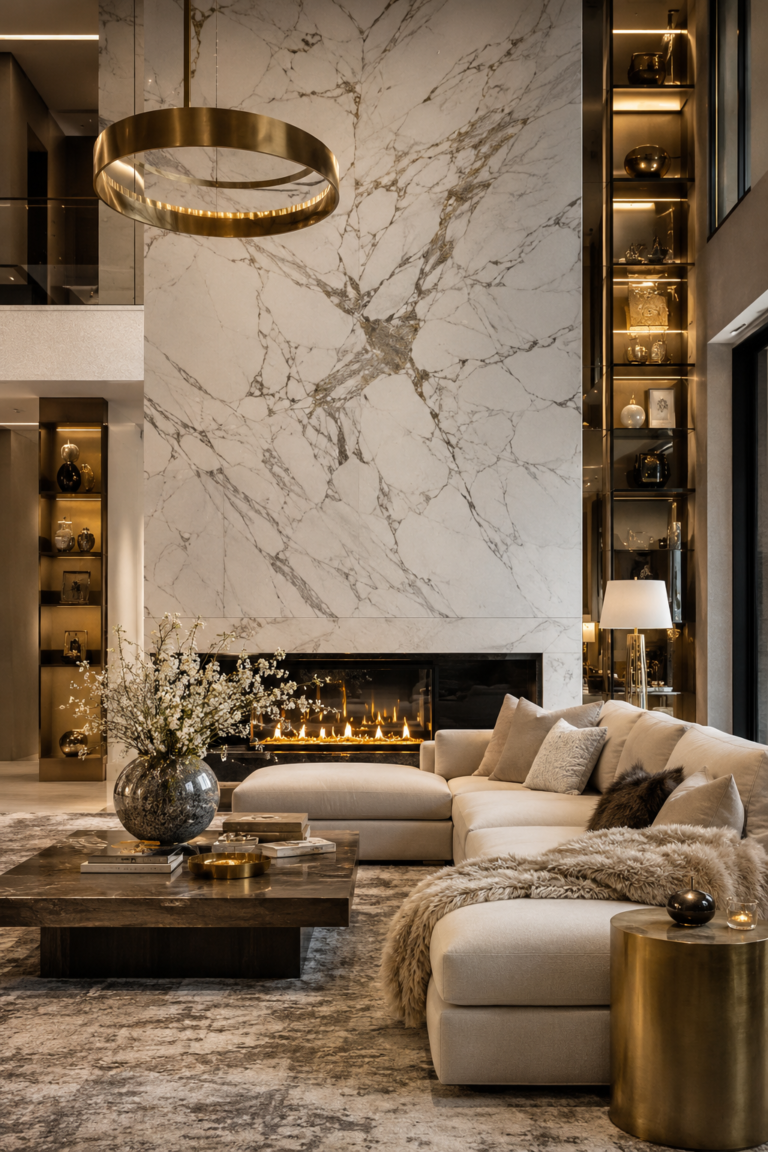
Metallic accents bring light and refinement to a black and white living room without changing its core color scheme. Brass, chrome, nickel, or brushed gold can appear through lamp bases, coffee table frames, mirrors, and decorative trays. Choose one dominant metal finish to maintain consistency, then use it sparingly. Against black surfaces, metallic details look dramatic, while against white backgrounds they add warmth, shine, and a subtle sense of luxury.
For a contemporary look, pair chrome with glossy black and crisp white furniture. For a warmer, more elegant atmosphere, combine aged brass with ivory fabrics and matte black finishes. Reflective accents work best when natural or artificial light can catch them, so position them near windows or lamps. The goal is not excessive glamour but carefully placed highlights that elevate the room, define important areas, and make the monochrome palette feel more dimensional.
11. Design a Minimalist Monochrome Living Room
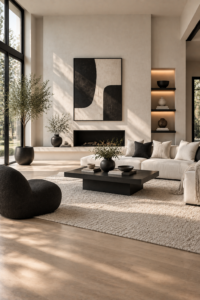
A minimalist black and white living room focuses on clean lines, open space, and carefully selected furniture. Choose a low-profile white sofa, a simple black coffee table, and one sculptural chair or lamp. Keep surfaces mostly clear and limit decorative objects to pieces with strong form or personal meaning. The restrained palette supports the minimalist approach, allowing architectural details, natural light, and the proportions of each item to take center stage.
Minimalist does not have to mean uncomfortable. Add warmth through a soft rug, textured cushions, and subtle off-white tones. Hidden storage can keep everyday items organized without disrupting the clean appearance. Use negative space intentionally rather than trying to fill every wall or corner. When each item has a clear purpose, the room feels calm, refined, and easy to maintain, proving that simple black and white interiors can still feel inviting and complete.
12. Bring in Greenery for Fresh Contrast
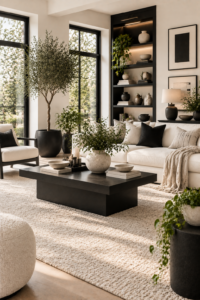
Indoor plants add life, movement, and natural color to a black and white living room without overwhelming its elegant foundation. Large plants such as fiddle-leaf figs, olive trees, or rubber plants can soften empty corners, while smaller greenery works well on shelves and coffee tables. Use black or white planters to maintain the monochrome design. The organic shapes of leaves provide welcome contrast against straight furniture lines and graphic patterns.
Choose plants according to the room’s available light and your preferred maintenance level. A tall plant beside a white sofa can create balance, while trailing vines add softness to black shelving. If natural plants are difficult to maintain, high-quality artificial greenery can achieve a similar visual effect. The fresh green accents make the room feel healthier, brighter, and more relaxed, ensuring the black and white palette never appears flat, severe, or overly controlled.
13. Combine Black Built-Ins With White Decor

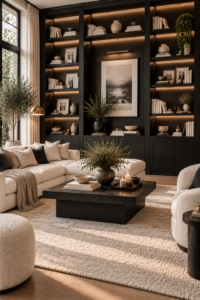
Black built-in shelves create a sophisticated backdrop and give everyday storage a custom architectural appearance. Paint the entire shelving unit matte black, then style it with white books, pale ceramics, framed prints, and a few natural objects. The light accessories stand out clearly against the dark background, making even simple pieces feel curated. Keep some shelves partially empty so the display remains balanced and avoids looking crowded or visually heavy.
Built-ins can frame a fireplace, television, window, or reading nook, helping the room feel organized and complete. Add concealed cabinets below for practical storage and open shelves above for decoration. Integrated lighting can brighten the dark finish and highlight selected objects in the evening. By repeating black elsewhere through furniture or window frames, the shelving becomes part of a cohesive scheme rather than an isolated statement, creating a polished and timeless living room.
14. Finish the Room With Sculptural Lighting
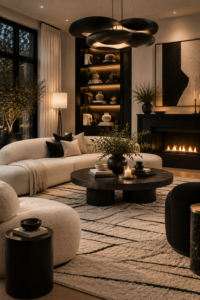
Sculptural lighting functions as both illumination and artwork in a black and white living room. A dramatic black chandelier, oversized white pendant, or curved floor lamp can define the room’s style without adding clutter. Select a fixture with a shape that complements the furniture, whether angular, rounded, minimalist, or vintage-inspired. Because the palette is restrained, an expressive silhouette becomes more noticeable and gives the space a memorable designer-quality focal point.
Layer the main fixture with table lamps, sconces, or discreet accent lighting to create a comfortable atmosphere at different times of day. Warm bulbs prevent black and white surfaces from appearing cold, especially during the evening. Consider scale carefully; a large fixture can suit high ceilings, while smaller rooms benefit from slim forms that do not block sightlines. Thoughtful lighting completes the design, highlights textures, and makes the entire living room feel intentionally composed.