17 Dreamy Cottage Garden Ideas Full of Charm
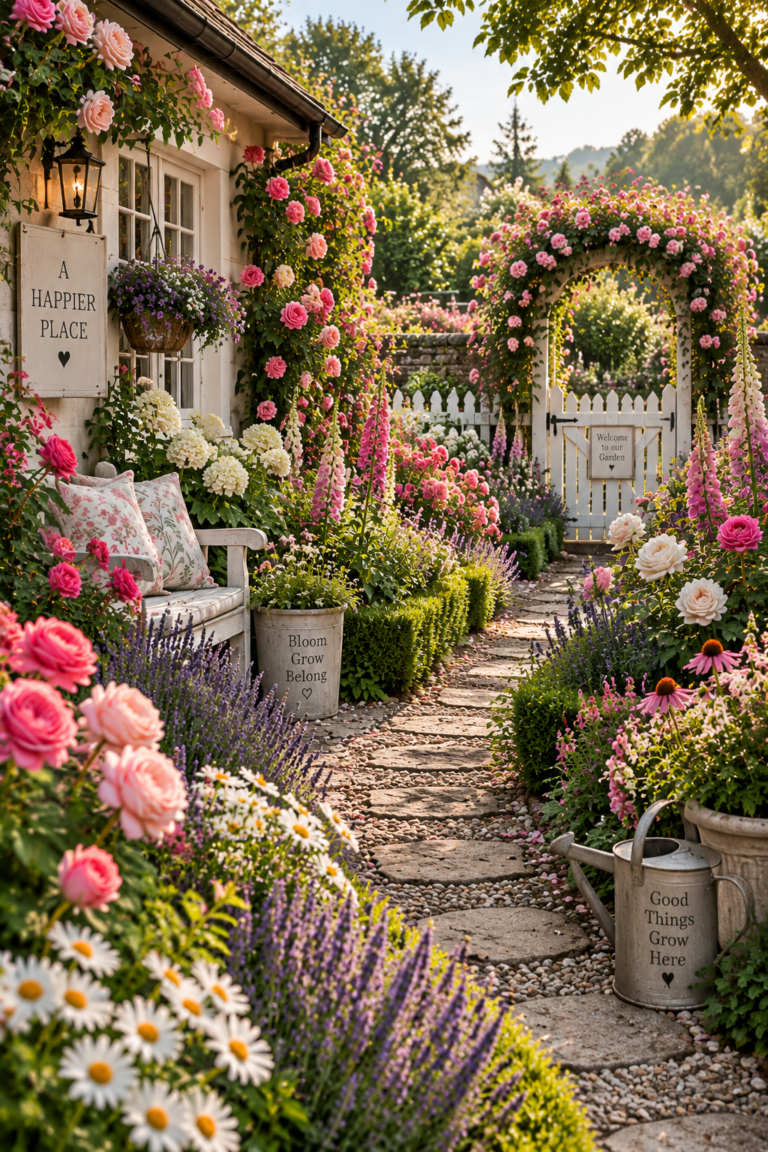
A cottage garden is designed to feel romantic, abundant, and naturally beautiful rather than perfectly controlled. Layers of flowers, winding paths, vintage details, and charming seating areas create a landscape that seems to have developed slowly over time. This relaxed gardening style celebrates color, texture, and seasonal change, making it ideal for anyone who wants an outdoor space that feels welcoming, personal, and filled with storybook character.
You do not need a large country property to achieve the look. A small backyard, narrow side garden, or compact front entrance can still capture cottage charm through thoughtful planting and decorative details. The key is combining informal flower arrangements with practical features such as paths, gates, trellises, and seating. These dreamy cottage garden ideas will help you create a peaceful, Pinterest-worthy retreat that looks established, layered, and beautifully inviting.
1. Create Overflowing Mixed Flower Borders
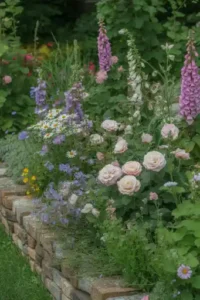
Mixed flower borders are at the heart of a traditional cottage garden because they create a full, colorful, and slightly untamed appearance. Combine tall flowers such as delphiniums and foxgloves with medium-height roses, daisies, and salvia. Finish the front of the border with low-growing lavender, catmint, or creeping plants. Repeating several colors throughout the bed will make the planting feel coordinated even when many different varieties are included.
Avoid arranging flowers in rigid rows, because cottage gardens look most charming when plants overlap and soften one another. Group the same variety in small clusters, then allow different textures to weave naturally between them. Include plants that bloom at different times so the border remains attractive from spring through autumn. As the garden matures, the layered planting will create a rich, established appearance that feels romantic rather than overly planned.
2. Add a Rustic Wooden Garden Gate
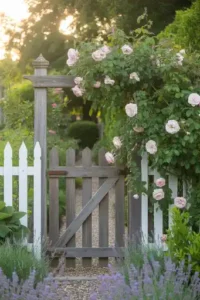
A rustic wooden gate creates an immediate sense of arrival and makes even a small garden feel secret and special. Choose a simple timber design with visible grain, a curved top, or traditional iron hardware. Allow climbing roses, jasmine, or clematis to grow around the entrance so the structure becomes part of the planting. A gate also helps divide different garden areas and adds architectural interest throughout the year.
For an aged appearance, leave the wood natural or use a soft painted finish in white, sage green, or muted blue. Place fragrant plants near the entrance so visitors experience scent as soon as they enter. A narrow gravel or stepping-stone path leading through the gate will strengthen the sense of discovery. This simple feature gives the garden structure while preserving the relaxed, welcoming character associated with cottage landscapes.
3. Plant Climbing Roses Around an Arch
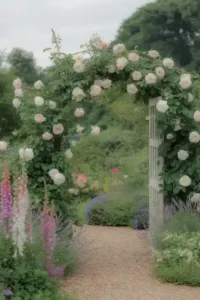
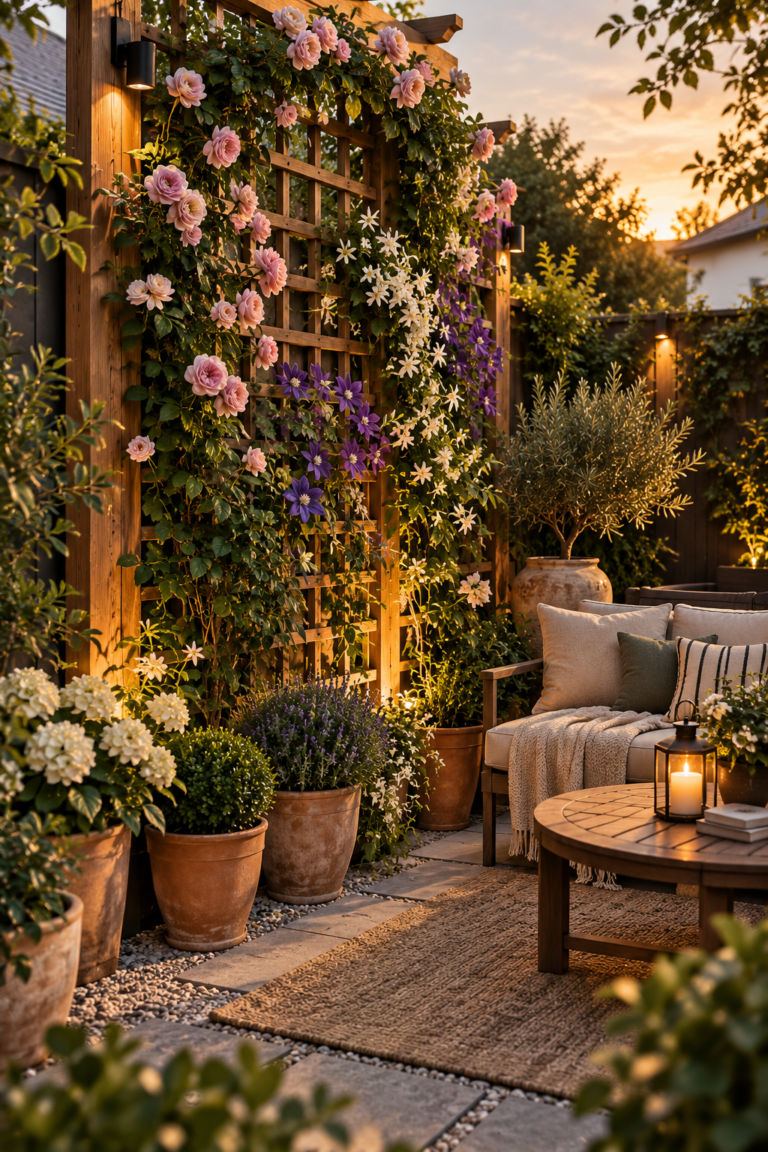
A rose-covered arch is one of the most romantic features you can introduce into a cottage garden. Position it over a pathway, entrance, or transition between two planting areas. Climbing and rambling roses will gradually soften the structure with foliage and flowers, creating a natural frame. Pale pink, cream, and soft apricot varieties offer a classic look, while deep red roses create a more dramatic focal point.
Install a strong arch that can support the mature weight of the plant, and gently tie new stems as they grow. Combine roses with clematis to extend the flowering season and introduce additional color. Plant lavender, catmint, or hardy geraniums around the base to hide bare lower stems. Over time, the arch will become an enchanting garden feature that looks beautifully established and invites visitors to walk beneath it.
4. Design a Winding Gravel Path
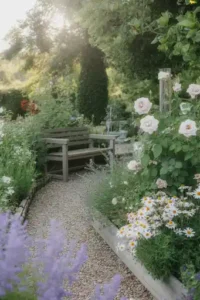
A winding gravel path adds movement and encourages visitors to explore the garden slowly. Unlike a straight walkway, a curved route creates mystery because the entire landscape is not visible at once. Pale gravel, crushed stone, or small pebbles provide a timeless surface that complements colorful planting. Allow flowers and ground covers to spill slightly over the edges so the path feels integrated rather than sharply separated.
Plan the route around existing trees, flower beds, and seating areas instead of forcing a perfectly symmetrical layout. A hidden bench, birdbath, or decorative pot placed near a bend can create a visual destination. Use metal, brick, or stone edging when needed to keep the gravel contained. The soft crunch underfoot and informal shape will add sensory charm while making the cottage garden easier to navigate in different seasons.
5. Include a Vintage Garden Bench
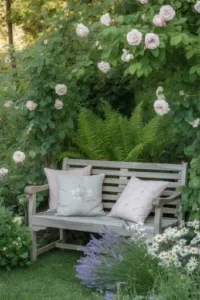
A vintage-style bench creates a peaceful place to sit while adding an instantly established quality to the garden. Look for weathered wood, painted metal, or decorative cast-iron designs that develop character over time. Position the bench beneath a tree, beside a flower border, or at the end of a path. Surrounded by plants, it will feel like a quiet discovery rather than a piece of furniture placed in an empty space.
Add an outdoor cushion or folded throw in a faded floral, stripe, or soft neutral color to make the seating more inviting. Fragrant flowers such as roses, lavender, honeysuckle, or sweet peas can enhance the experience. Keep the area around the bench slightly open so it remains practical to use. This simple feature encourages relaxation and gives the cottage garden a romantic, lived-in personality.
6. Grow Lavender Along Pathway Edges
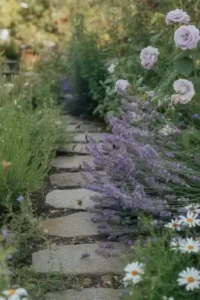
Lavender is ideal for cottage gardens because it offers fragrance, texture, color, and a naturally relaxed shape. Plant it along gravel paths, near seating areas, or around the edges of sunny flower beds. The soft purple flowers create a beautiful transition between hard surfaces and taller planting. Lavender also attracts bees and butterflies, helping the garden feel alive and supporting beneficial pollinators throughout the flowering season.
Choose a variety suited to your climate and provide well-drained soil with plenty of sunlight. Space plants far enough apart to allow airflow and prevent overcrowding. Prune them lightly after flowering to maintain a full shape and encourage healthy growth. Pair lavender with roses, catmint, white daisies, or ornamental grasses for a layered effect. The combination will create a fragrant pathway that feels both elegant and effortlessly natural.
7. Install a White Picket Fence
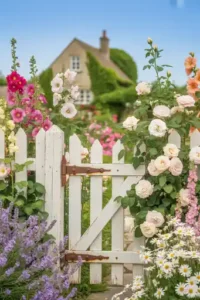
A white picket fence provides classic cottage character while giving flower borders a clear and attractive backdrop. Its simple vertical lines contrast beautifully with loose planting and colorful blooms. Use the fence to frame a front garden, divide outdoor zones, or create a small enclosed area around a seating space. White paint offers a traditional appearance, while pale gray, green, or natural wood can create a softer variation.
Encourage flowers to grow through and around the fence so the structure feels connected to the landscape. Hollyhocks, roses, daisies, and foxgloves look especially charming against simple pickets. Add a matching gate and traditional latch to complete the design. Regular maintenance may be required to keep painted timber looking fresh, but the visual effect is timeless. The fence will make the garden feel welcoming, organized, and full of storybook appeal.
8. Create a Wildflower Meadow Corner
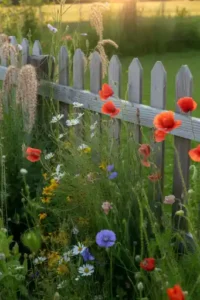
A wildflower corner introduces movement, biodiversity, and a beautifully informal quality to the cottage garden. Even a small patch can be planted with poppies, cornflowers, cosmos, daisies, and native flowering species. Allow grasses and flowers to grow at varied heights rather than trimming them into neat shapes. The result will feel spontaneous and natural while providing valuable food and shelter for pollinators and other beneficial wildlife.
Choose a sunny location and prepare the soil carefully before sowing seeds. Native wildflowers are often easier to maintain because they are adapted to local conditions. Mow or cut back the area at the appropriate time after seeds have formed, allowing plants to return naturally the following year. Add a narrow mown path or small bench nearby so the meadow feels intentional. This feature brings softness and seasonal beauty into the garden.
9. Use Weathered Terracotta Pots
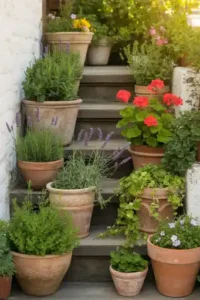
Weathered terracotta pots add warmth, texture, and an authentic collected-over-time appearance. Arrange containers in groups near steps, doors, benches, or along pathways. Mix several sizes and shapes, including tall urns, shallow bowls, and traditional round pots. Over time, natural staining and moss can make the containers even more attractive. Their earthy orange color works beautifully with green foliage, purple lavender, white flowers, and soft pink blooms.
Plant pots with a combination of herbs, geraniums, trailing flowers, small roses, or seasonal bulbs. Grouping containers in odd numbers usually creates a more relaxed and balanced display. Place taller pots toward the back and allow low plants to spill around the edges. Avoid using too many unrelated container materials nearby, because terracotta has the strongest impact when repeated. This flexible idea adds cottage charm to patios, balconies, entrances, and compact gardens.
10. Add a Charming Birdbath
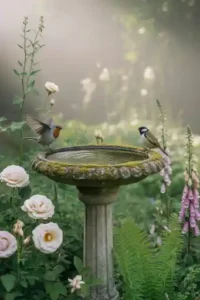
A birdbath introduces a graceful focal point while encouraging birds to visit the garden. Traditional stone, aged metal, or simple pedestal designs blend especially well with cottage-style planting. Position the birdbath where it can be viewed from a window or seating area, and surround it with low flowers and ground covers. The gently reflective water adds brightness and movement, even when the garden is not at its peak flowering period.
Keep the water clean and shallow enough for small birds to use safely. Place a few stones inside if additional footing is needed, and position the bath away from locations where predators can hide. Ferns, lavender, foxgloves, and roses create an attractive surrounding display without blocking access. As birds begin to visit regularly, the feature will contribute sound, motion, and life, making the garden feel even more peaceful and enchanting.
11. Train Sweet Peas on a Rustic Trellis
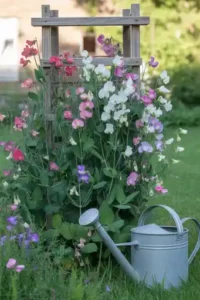
Sweet peas bring delicate flowers and beautiful fragrance to vertical areas of a cottage garden. Grow them on a rustic wooden trellis, obelisk, fence, or simple arrangement of hazel branches. Their climbing stems soften structures quickly and create an abundant display in spring or early summer. Shades of pink, purple, white, and burgundy can be mixed for a romantic effect that looks especially charming near entrances and seating areas.
Provide support early so young plants can begin climbing without becoming tangled. Regularly pick flowers to encourage additional blooms and enjoy small arrangements indoors. Sweet peas prefer rich soil, consistent moisture, and sunlight with some protection from extreme heat. Plant low-growing flowers around the base to keep the area full once the vines rise. This fragrant addition provides height, softness, and classic cottage character without requiring much ground space.
12. Plant Hollyhocks Against a Wall
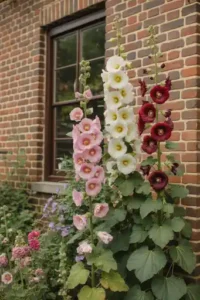
Hollyhocks create impressive vertical color and look particularly beautiful growing against brick walls, fences, sheds, or garden boundaries. Their tall flower spikes introduce height at the back of borders without requiring complex structures. Traditional shades include pink, cream, red, yellow, and burgundy. When planted in relaxed groups, hollyhocks give the garden an established country appearance that feels nostalgic, generous, and full of summer charm.
Place them in a sunny, sheltered location where strong winds are less likely to damage the stems. Taller varieties may require discreet support as they grow. Allow some seed heads to remain so plants can self-sow naturally and appear in new areas over time. Combine hollyhocks with roses, delphiniums, geraniums, and daisies to create layered borders. Their height will draw the eye upward and soften hard walls beautifully.
13. Create a Hidden Tea Corner
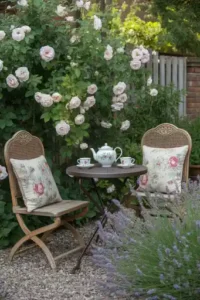
A hidden tea corner transforms an overlooked part of the garden into a charming destination. Place a small bistro table and two chairs behind tall flowers, beneath a tree, or beside a rose-covered wall. The area should feel slightly enclosed without being completely separated from the surrounding landscape. Gravel, brick, or flat stones can provide a practical base while preserving the informal cottage appearance.
Decorate the table with a small pot of herbs or seasonal flowers, and add weather-resistant cushions for comfort. Fragrant plants such as jasmine, lavender, roses, and honeysuckle will make the corner especially enjoyable. A lantern or string of subtle outdoor lights can extend its use into the evening. This intimate seating area invites quiet breakfasts, afternoon tea, and peaceful reading while giving the garden a romantic sense of discovery.
14. Mix Edible Plants with Flowers
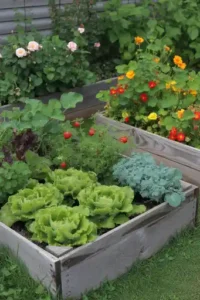
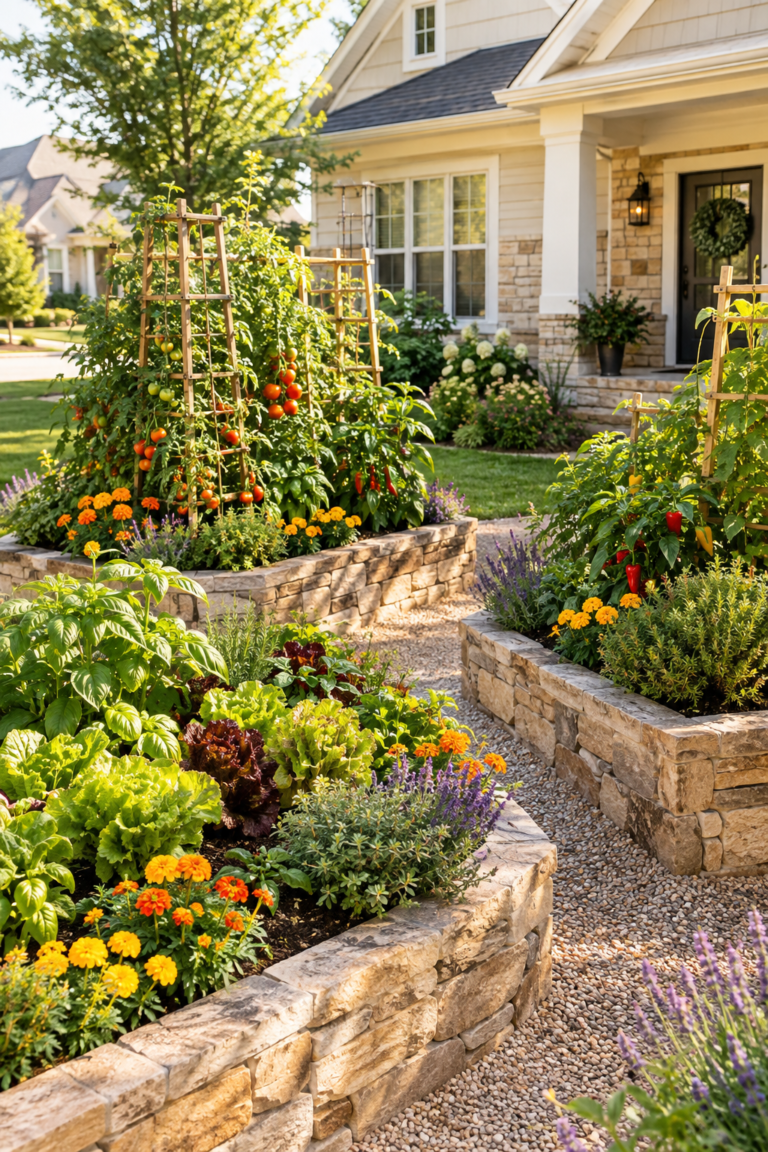
Cottage gardens traditionally combine beauty and usefulness, making edible plants a natural addition to flower borders. Mix herbs, lettuce, kale, strawberries, and compact vegetables with marigolds, nasturtiums, roses, and other ornamentals. The varied leaf shapes and colors create visual interest while providing fresh ingredients. This approach is especially practical in small gardens where separate decorative and vegetable areas may not be possible.
Place frequently harvested herbs near paths or kitchen doors for easy access. Use low edging, woven supports, or rustic raised beds to give productive areas gentle structure. Flowers can attract pollinators and help soften the appearance of vegetables as they grow. Choose plants with similar sunlight and watering needs when combining them. The finished garden will feel abundant, useful, and authentic while maintaining the romantic style of a traditional cottage landscape.
15. Add a Small Garden Pond
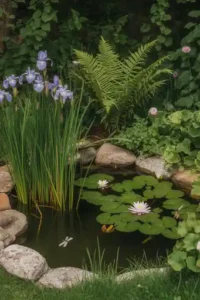
A small pond introduces reflection, sound, and wildlife into a cottage garden. It can be created with a flexible liner, preformed container, or even a large watertight vessel. Surround the edges with stones, ferns, irises, grasses, and low flowering plants so the water feature blends naturally into the landscape. Even a compact pond can attract insects, birds, and amphibians, adding movement and ecological value.
Choose a location with some sunlight but avoid placing the pond directly beneath trees that drop large amounts of leaves. Include different water depths and a safe exit point for wildlife. Water lilies or floating plants can provide shade and visual interest. Avoid overdecorating the area with artificial ornaments, because natural materials will suit the cottage style better. The finished pond will become a calming focal point throughout the seasons.
16. Decorate with Vintage Garden Finds
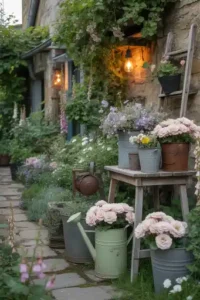
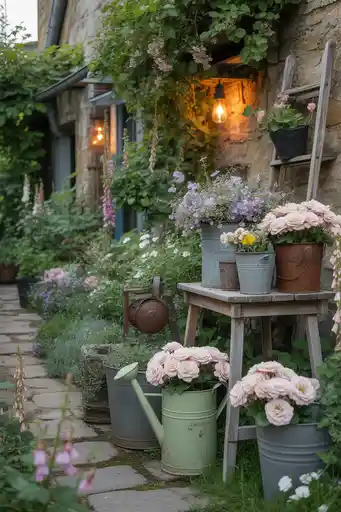
Vintage garden objects add personality and help a new garden feel as though it has evolved over many years. Old watering cans, enamel buckets, wooden ladders, metal lanterns, and weathered tools can become decorative features when placed thoughtfully. Use them as planters, supports, or simple accents among flowers. The aged surfaces and faded colors complement natural planting and introduce character that modern plastic accessories cannot easily provide.
Avoid displaying too many items in one area, because the garden should still feel peaceful rather than crowded. Select pieces with interesting shapes, practical history, or personal meaning. A vintage ladder can support climbing plants, while an old bucket may hold seasonal flowers. Allow some objects to develop rust or patina naturally, provided they remain safe. These small details create memorable moments and reinforce the garden’s collected, nostalgic charm.
17. Finish with Soft Outdoor Lighting
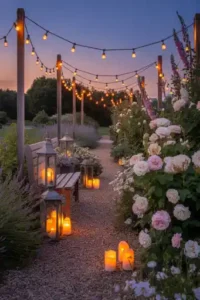
Soft lighting allows the cottage garden to remain inviting after sunset and adds a magical quality to familiar features. Use warm string lights around a pergola, solar lanterns beside paths, and low lights near steps or seating areas. Avoid overly bright fixtures that flatten the garden and disturb its peaceful atmosphere. Gentle pools of light will highlight flowers, textured walls, trees, and decorative structures while preserving areas of shadow.
Choose weather-resistant fixtures with a warm color temperature to maintain the romantic appearance. Lanterns can be grouped around a bench, while discreet uplights can emphasize a rose arch or mature tree. Solar options are useful where electrical wiring is difficult, although they should receive enough daylight to charge properly. Thoughtful lighting completes the garden by making evening walks, outdoor meals, and quiet moments feel intimate, safe, and beautifully atmospheric.