
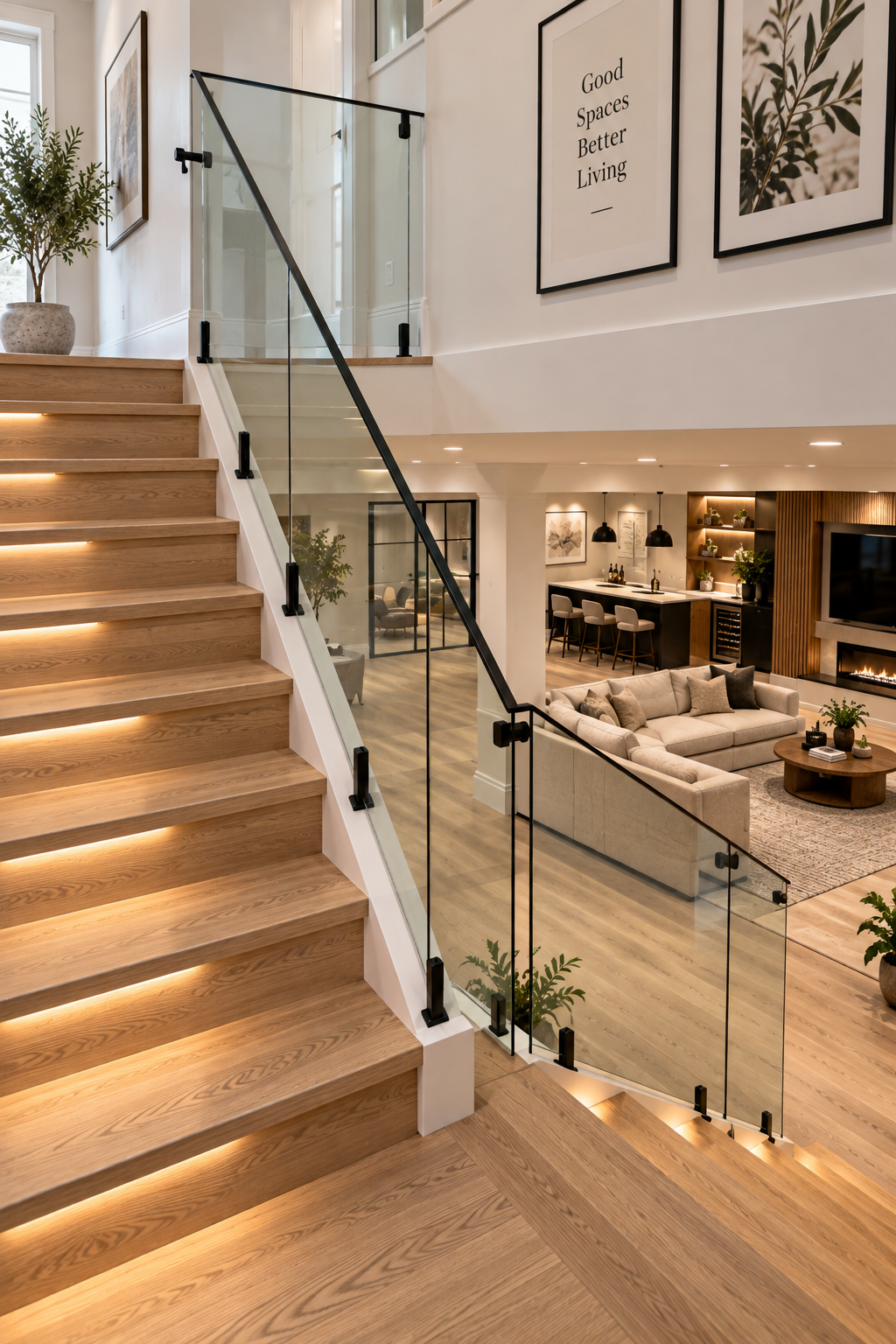
15 Basement Staircase Ideas That Add Style and Function
Basement staircases are often treated as purely practical features, yet they can become one of the most memorable design elements in a home. With the right materials, lighting, storage, and decorative details, even a narrow stairway can feel polished and intentional. Whether your basement serves as a family room, guest suite, home office, or entertainment zone, these staircase ideas will help you create a transition that feels stylish, safe, and beautifully connected to the rest of your interior.
The best basement staircase designs balance appearance with everyday function. Durable finishes, smart railings, slip-resistant surfaces, and thoughtful illumination can improve comfort while adding personality. From modern floating steps and warm wood treads to built-in storage and bold painted walls, there are options for every layout and budget. Use these ideas as inspiration to transform an overlooked passage into a design feature that enhances your basement and gives visitors an inviting first impression.
1. Install a Modern Glass Railing

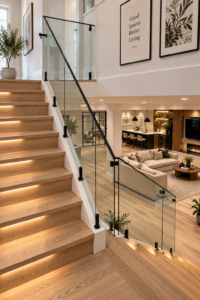
A glass railing instantly makes a basement staircase feel brighter, wider, and more contemporary. Clear panels allow natural and artificial light to travel through the stairwell instead of being blocked by bulky walls or traditional balusters. Pair the glass with warm oak treads for a balanced look that feels modern without becoming cold. This design works especially well in finished basements where the stairs open directly into a living room, lounge, or entertainment space.
For safety and easy maintenance, choose tempered glass panels with minimal metal fittings and a comfortable handrail. Black hardware creates a striking architectural outline, while brushed steel offers a softer, more streamlined effect. Keep the surrounding walls light and uncluttered so the transparent railing remains the focal point. Adding recessed step lights or a pendant above the landing will enhance the elegant appearance and make nighttime movement more secure for family members and guests.
2. Add Built-In Storage Under the Stairs
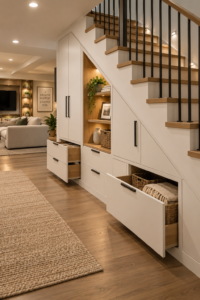
Built-in storage beneath a basement staircase turns unused square footage into a highly practical feature. Deep drawers can hold seasonal decorations, sports equipment, games, or extra linens, while cabinets provide concealed space for larger household items. Matching the storage fronts to the surrounding wall creates a seamless look, while contrasting wood cabinetry makes the staircase feel like custom furniture. This idea is particularly valuable in smaller basements where every inch needs to serve a clear purpose.
Plan the storage around the height and depth available under each step. Lower sections work well for pull-out shoe drawers, while taller areas can become closets, shelving, or a compact utility zone. Use soft-close hardware and simple handles to keep the design polished and convenient. For a Pinterest-worthy finish, style one open niche with books, baskets, or decorative objects, then keep the remaining compartments closed to maintain a clean and organized appearance.
3. Paint the Stairs a Bold Color
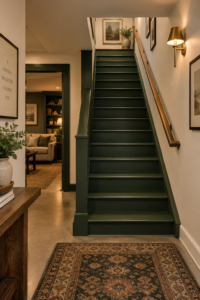
Painting basement stairs in a bold color is an affordable way to create instant personality. Deep navy, forest green, charcoal, or muted terracotta can make the staircase feel intentional rather than forgotten. You can paint the risers, treads, railing, or the entire stair structure depending on how dramatic you want the result to appear. A rich color also helps visually connect the stairwell with nearby basement furniture, rugs, artwork, and accent walls.
Use durable floor or porch paint designed to withstand repeated foot traffic, and add a clear protective finish where needed. If the stairwell is narrow, balance darker steps with pale walls and bright lighting to prevent the space from feeling enclosed. Another attractive option is painting only the risers while leaving natural wood treads exposed. This combination introduces color while preserving warmth, texture, and a timeless quality that suits many interior styles.
4. Introduce a Patterned Stair Runner
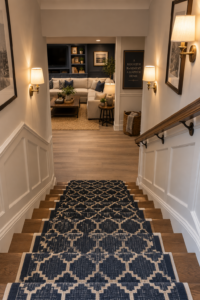
A patterned stair runner adds softness, grip, and decorative interest to a basement staircase. Stripes can visually lengthen the stairs, geometric patterns create modern energy, and subtle vintage motifs bring warmth to traditional interiors. Because basement steps can feel hard or echo loudly, a runner also improves comfort and reduces sound. Choose a pattern that coordinates with the flooring and furnishings below so the transition into the basement feels carefully planned and visually connected.
Select a low-pile, stain-resistant material that can handle frequent use and occasional moisture. Secure installation is essential, particularly around each tread edge, to prevent movement or tripping. A narrow runner that leaves a border of painted or stained wood on both sides creates a tailored, high-end appearance. Complete the design with a coordinating handrail and warm wall sconces, giving the stairway a welcoming atmosphere while improving visibility and everyday safety.
5. Create a Floating Staircase
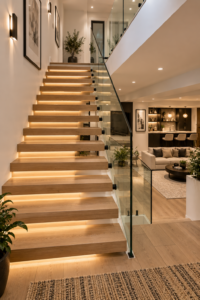
Floating stairs create a sleek architectural statement and help a basement entry feel open rather than heavy. Each tread appears to project from the wall or central support, leaving visible space between the steps. This openness allows light to pass through and can make a compact stairwell seem larger. Natural wood treads soften the modern structure, while concrete, metal, or dark-stained finishes produce a more industrial and dramatic look suitable for contemporary basements.
Because floating staircases require careful engineering, work with a qualified professional to confirm structural support, local codes, tread spacing, and railing requirements. A glass guardrail can preserve the airy effect, while slim black balusters offer stronger visual definition. Integrated lighting beneath each tread creates a beautiful glow and improves visibility. Keep nearby finishes simple so the staircase remains the central design feature instead of competing with busy walls, furniture, or decorative accessories.
6. Combine Wood Treads With White Risers
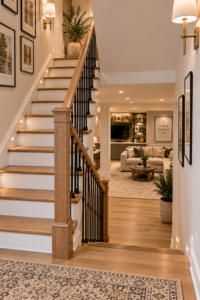
Wood treads paired with crisp white risers create a classic basement staircase that feels bright, clean, and versatile. The contrast highlights each step and works equally well in farmhouse, coastal, transitional, and modern homes. Choose oak, maple, or another durable hardwood for the treads, then stain it to complement the basement flooring. White risers reflect light through the stairwell, helping an enclosed or windowless area feel noticeably fresher and more spacious.
To maintain the polished appearance, use washable semi-gloss paint on the risers and apply a protective finish to the wood. A matching wood handrail can tie the design together, while black balusters add contemporary contrast. Consider installing simple wall molding or framed artwork beside the stairs for extra character. This combination is especially appealing for homeowners who want a lasting design that can adapt easily as basement colors, furniture, and décor change over time.
7. Use Vertical Wood Slats
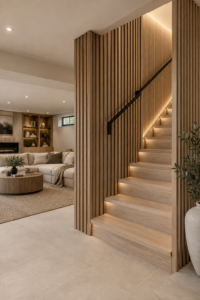
Vertical slat railings offer a stylish way to define a basement staircase without completely closing it off. Slim wood slats extend from the steps or floor to the ceiling, creating rhythm, texture, and a strong architectural feature. They provide separation while still allowing light and sightlines to pass between spaces. Light oak slats feel warm and Scandinavian, whereas dark walnut or painted black slats create a moodier, more sophisticated basement entrance.
Keep the spacing consistent and ensure the design meets local safety requirements, especially in homes with children or pets. The slats can continue along a nearby wall or ceiling to create a cohesive custom look. Pair them with simple treads, concealed lighting, and minimal décor so the linear pattern remains visually clear. This solution works particularly well when basement stairs sit beside an open living area and need definition without a solid partition.
8. Design a Stairway Gallery Wall
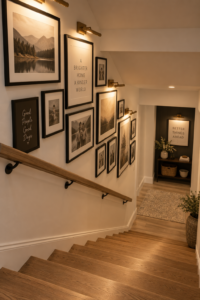
Turning the stairwell walls into a gallery creates an inviting visual journey to the basement. Family photographs, travel prints, children’s artwork, or vintage illustrations can make the passage feel personal and collected. Use frames in a consistent color for a clean arrangement, or mix finishes for a relaxed, eclectic style. Following the upward angle of the staircase helps the display feel connected to the architecture and draws attention through an otherwise overlooked area.
Before hanging anything, arrange the frames on the floor and test the spacing. Keep important images near eye level as people move along the stairs, and avoid pieces that project too far into a narrow walkway. Picture lights, small sconces, or directional ceiling fixtures can highlight the display and improve visibility. For a cohesive finish, repeat colors from the basement décor within the artwork, mats, or frames, linking the stairwell to the room below.
9. Add LED Lighting Under Each Step
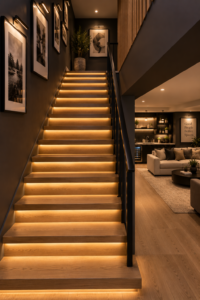
LED lighting beneath each tread gives basement stairs a modern, luxurious appearance while improving safety. The concealed glow clearly defines every step and is particularly useful in stairwells with limited natural light. Warm white lighting creates a comfortable residential atmosphere, while cooler tones produce a sharper contemporary effect. This feature can be added to wood, concrete, or floating stairs, making it suitable for many design styles and levels of basement renovation.
Install the lights with a dimmer or motion sensor so they activate automatically when someone enters the stairwell. Conceal wiring and channels carefully for a professional finish, and choose low-profile fixtures that do not interfere with foot placement. Combine under-tread lighting with a soft ceiling fixture or wall sconces rather than relying on one bright overhead bulb. Layered illumination reduces harsh shadows and makes the staircase feel both functional and thoughtfully designed.
10. Feature an Exposed Brick Wall
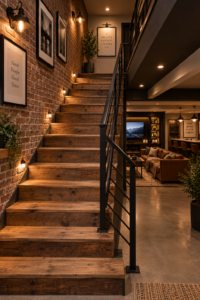
An exposed brick wall gives a basement staircase warmth, texture, and urban character. Original brick can be cleaned and sealed to preserve its natural variation, while thin brick veneer can recreate the effect in newer homes. The rich surface pairs beautifully with black metal railings, reclaimed wood treads, and industrial lighting. It also creates a strong transition into basements designed as media rooms, bars, game spaces, or relaxed family lounges.
If the brick makes the stairwell feel dark, use light flooring, warm sconces, and a pale ceiling to balance the visual weight. Whitewashing the brick is another option for achieving texture with a softer, brighter appearance. Keep artwork minimal because the masonry already provides plenty of interest. A simple handrail and clean stair profile will allow the brick to stand out while maintaining a safe, uncluttered route to the basement.
11. Build a Reading Nook Under the Stairs
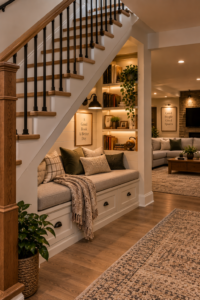
A compact reading nook beneath the staircase adds charm and useful seating to a finished basement. A built-in bench can fit naturally into the angled space, creating a comfortable spot for reading, relaxing, or watching children play nearby. Add a supportive cushion, several pillows, and a small wall-mounted light. Open shelves beside or above the bench provide room for books and decorative objects without taking up valuable floor space elsewhere.
Choose performance fabric for the cushion so the nook can handle everyday use and occasional spills. Hidden storage beneath the seat can hold blankets, toys, or board games, making the feature even more functional. Paint the interior in a contrasting shade or use patterned wallpaper to define the area visually. This idea works best when the underside of the staircase is accessible from the basement room rather than enclosed within a narrow hallway.
12. Choose Slim Black Metal Railings
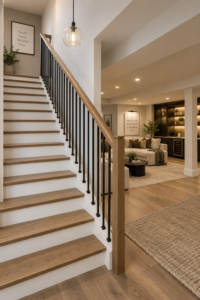
Black metal railings bring crisp definition and modern contrast to basement stairs. Slim vertical balusters suit contemporary and transitional interiors, while simple horizontal lines create a more industrial appearance. The dark finish looks especially striking beside pale walls and natural wood treads. Because the railing has a lightweight visual profile, it can make an open staircase feel secure without creating the heaviness of a full wall or thick traditional wood spindles.
Choose a powder-coated finish for durability and easy cleaning, particularly in a busy family basement. Coordinate the railing with nearby door hardware, light fixtures, or furniture legs to create a consistent design language. A wood handrail can soften the metal and make the staircase more comfortable to use. For additional impact, combine the railing with white risers, a textured runner, or subtle step lighting while keeping the surrounding décor restrained.
13. Decorate With Statement Wallpaper
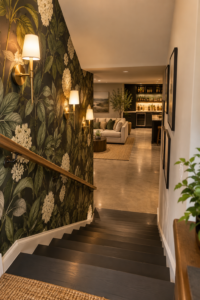
Wallpaper can transform a plain basement stairwell into a memorable design moment. A botanical print introduces softness, geometric patterns add modern movement, and subtle textured paper creates depth without overwhelming a small space. Cover one feature wall rather than every surface to keep the result balanced. Because the staircase is a transitional area, it is an ideal place to experiment with a pattern that might feel too bold in a larger room.
Select washable, durable wallpaper, especially if the walls are likely to be touched frequently. In basements with moisture concerns, address ventilation and waterproofing before installation. Coordinate the wallpaper with stair paint, runner colors, and lighting for a unified effect. A simple railing and minimal artwork will prevent visual clutter. Peel-and-stick wallpaper can be a practical choice for renters or homeowners who enjoy updating their décor as trends and preferences change.
14. Incorporate Display Shelves and Niches
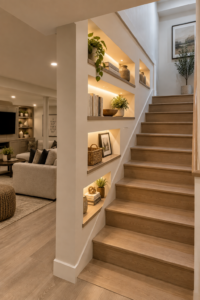
Closed stair risers can become practical display shelves when small recessed niches are built along the side wall or under the staircase. These compartments are ideal for books, baskets, plants, or collected objects and make the stairwell feel integrated with the basement rather than separate from it. Repeating niches in a clean grid creates a modern built-in appearance, while varied sizes produce a more casual and creative arrangement suitable for family spaces.
Use the shelves selectively so the area remains tidy and safe. Avoid fragile items near the edge or anything that could fall onto the steps. Integrated lighting inside several niches adds depth and creates a soft evening glow. Paint the shelving the same color as the wall for a seamless effect, or use natural wood interiors for contrast. This idea combines decoration and storage without reducing the walking width of the staircase.
15. Embrace Polished Concrete Stairs
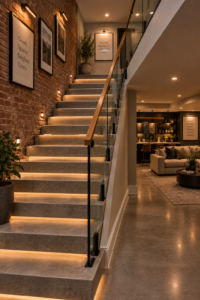
Concrete stairs offer exceptional durability and a clean, architectural style for modern basements. Their solid appearance works well in industrial, minimalist, and contemporary interiors, especially when paired with exposed brick, black metal, or warm wood accents. Polished concrete creates a smoother, more refined finish, while lightly textured surfaces provide extra grip. The neutral gray tone also makes an ideal backdrop for dramatic lighting, colorful artwork, or a bold statement railing.
To prevent the staircase from feeling cold, introduce warmth through a wood handrail, nearby rugs, soft wall colors, or amber-toned lighting. Ensure the tread surface is sealed and slip-resistant, particularly if moisture may enter from an exterior basement door. A glass railing can make the heavy material appear lighter, while black steel reinforces its industrial character. Concrete stairs are most practical during major renovations or new construction because structural changes can be complex.