17 Home Decor Items Every Stylish Home Should Have
A stylish home is not defined by expensive furniture or constantly changing trends. It feels intentional because every object contributes comfort, personality, balance, or function. The right decorative pieces can transform plain rooms, connect different colors and materials, and make everyday spaces feel more welcoming. By choosing versatile items that work across seasons, you can create a polished interior without replacing everything whenever a new decorating trend appears. Thoughtful details often create the strongest and most memorable impression.
From statement mirrors and layered textiles to beautiful lighting, artwork, and practical storage, a few well-chosen essentials can elevate every room. These decor items are adaptable enough for modern, farmhouse, minimalist, traditional, and eclectic homes. Use the following ideas as a flexible checklist rather than a strict formula, selecting pieces that reflect your taste, suit your available space, and make your home feel comfortable, personal, and thoughtfully complete. Small updates can produce a surprisingly meaningful visual difference.
1. Statement Wall Mirror
An oversized wall mirror is one of the easiest ways to make a stylish home feel brighter, larger, and more polished. Choose an arched, round, or organically shaped design that complements your furniture without overwhelming the room. Brass, black metal, and natural wood frames all work beautifully. Position the mirror across from a window or light source so it reflects daylight and creates a more open, airy atmosphere. It also introduces an elegant focal point without requiring additional floor space.
A statement mirror also acts like functional artwork, giving an empty wall instant character while remaining useful every day. In an entryway, it provides a convenient final check before leaving home. In a living room, it adds depth behind a console or sofa. Keep surrounding accessories minimal so the mirror remains the focal point, and repeat its frame finish in lighting, hardware, or nearby decorative objects for a cohesive look.
2. Layered Throw Pillows
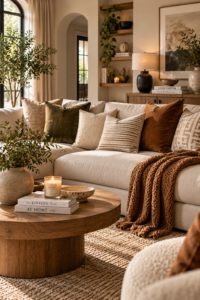
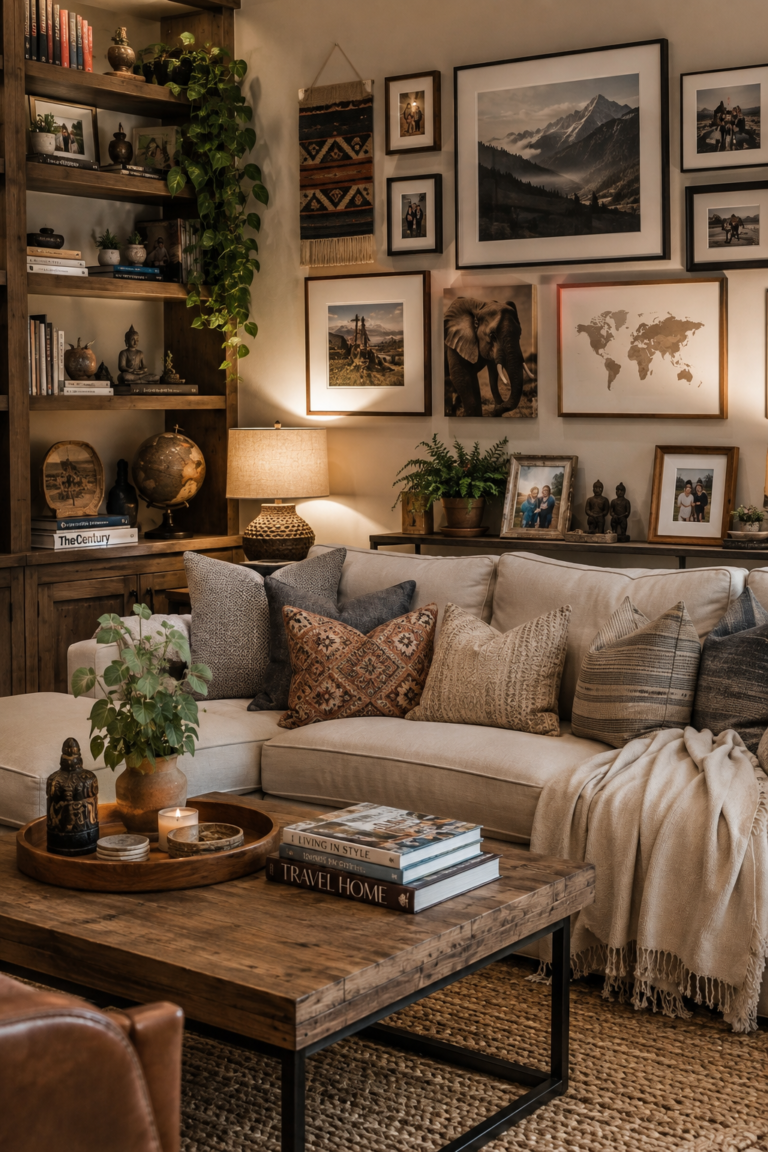
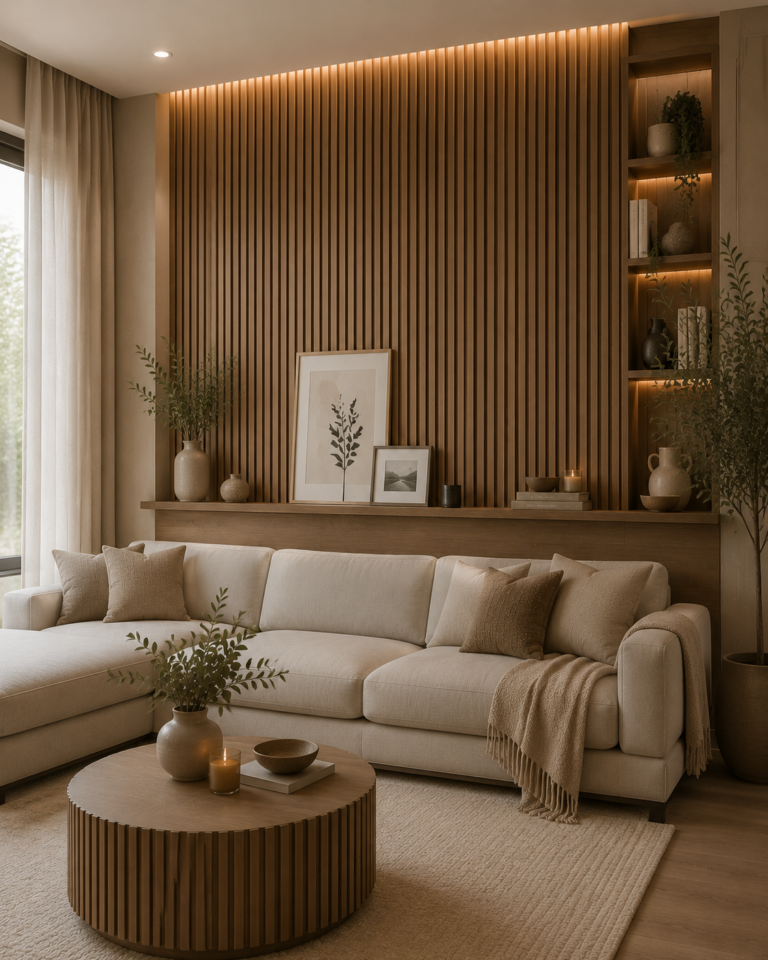
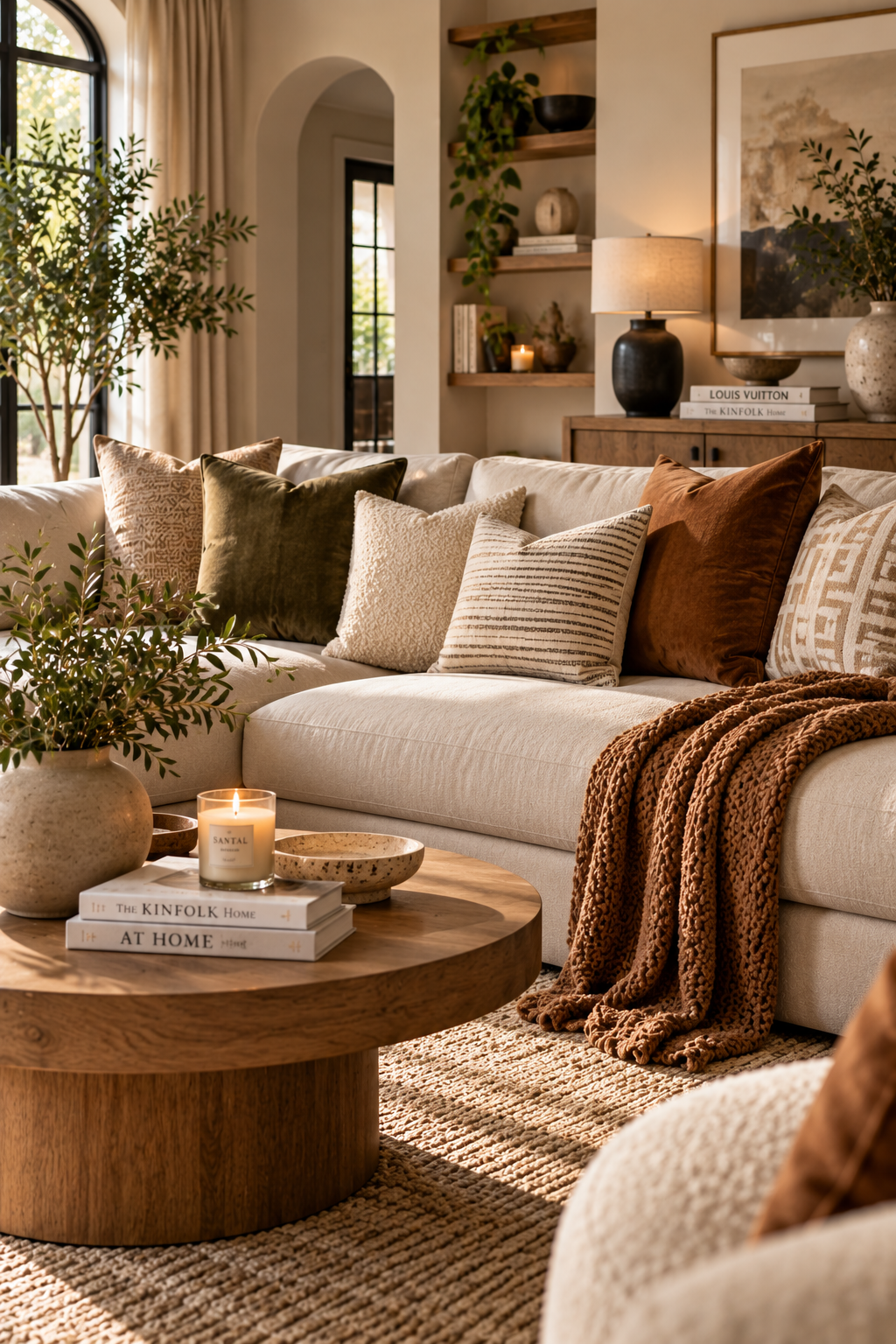
Throw pillows instantly refresh a room and allow you to introduce color, pattern, and texture without making a permanent commitment. A stylish arrangement usually combines different sizes, such as large square pillows at the back, smaller squares in front, and one lumbar cushion for contrast. Mix linen, velvet, boucle, woven cotton, or embroidered fabrics while keeping a consistent color palette so the display feels collected rather than chaotic. This approach adds depth and makes a simple sofa feel thoughtfully styled.
For a designer-approved look, avoid buying several identical pillows from the same set. Instead, pair one bold pattern with quieter solids and subtle textures. Odd-numbered groupings often appear more relaxed and visually balanced, especially on sofas, beds, and accent chairs. Seasonal pillow covers are also practical because they store easily and make it simple to update your home with warmer tones in autumn, fresh colors in spring, or festive details during holidays.
3. Soft Decorative Throw

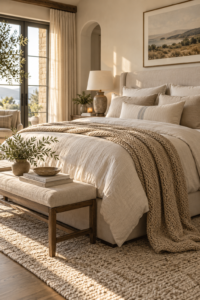
A decorative throw adds warmth, softness, and effortless style to sofas, beds, benches, and reading chairs. The best options feel inviting while also contributing to the room’s color story. Choose chunky knits for cozy spaces, lightweight linen for summer, brushed wool for timeless elegance, or soft cotton for everyday practicality. Drape the throw loosely rather than folding it too perfectly, allowing natural folds to create a relaxed, lived-in appearance. Fringed edges or patterns add interest without making a room busy.
Use a throw to introduce a subtle accent color or connect different elements within the room. A rust blanket can echo artwork, while an olive or navy throw can ground a pale neutral space. Placement matters: fold it across the foot of the bed, cascade it over one sofa arm, or tuck it into a woven basket. This simple accessory makes a room feel more finished while keeping comfort close at hand.
4. Elegant Table Lamp
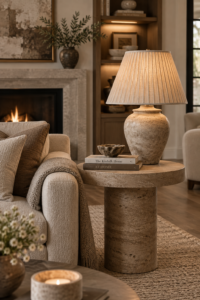
Every stylish home needs layered lighting, and a beautiful table lamp is essential for creating warmth after sunset. Look for sculptural ceramic bases, glass forms, metal finishes, or natural stone textures that add interest even when the lamp is switched off. A linen, pleated, or softly tapered shade diffuses light gently, making bedrooms, living rooms, and entryways feel calmer, cozier, and more thoughtfully designed. It can also introduce a polished accent through color, shape, and material.
Place table lamps where overhead lighting feels too harsh, such as beside a sofa, on a bedside table, or at the end of a console. Matching lamps create symmetry, while different but complementary designs can make a room feel more collected. Choose warm bulbs for a flattering glow, and pay attention to scale: the lamp should feel substantial enough for the furniture beneath it without blocking artwork, windows, or important sightlines.
5. Large Area Rug
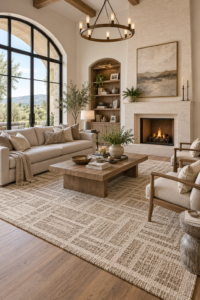
A properly sized area rug anchors furniture, defines zones, and makes a room feel intentionally arranged. In living spaces, the rug should ideally extend beneath the front legs of sofas and chairs, connecting every major piece. In bedrooms, choose a rug large enough to frame the bed and provide a soft landing on both sides. Small floating rugs can make furniture appear disconnected, so generous proportions usually create a more luxurious result.
Texture and pattern should support the room rather than compete with it. Vintage-inspired rugs bring warmth and personality, flatweaves suit casual spaces, and plush wool options add comfort underfoot. Neutral rugs with subtle variations are versatile, while bolder designs can become the room’s main statement. Before purchasing, mark the dimensions with painter’s tape to understand the visual impact and confirm that doors, walkways, and furniture placement will remain practical. A rug pad improves comfort, prevents slipping, and protects flooring.
6. Decorative Coffee Table Books
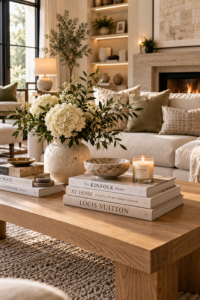
Coffee table books add personality, color, and sophistication while giving guests a glimpse of your interests. Select beautiful volumes about art, travel, fashion, architecture, photography, or design, then stack two or three with the largest book at the bottom. Their covers and spines can reinforce the room’s palette, while varied sizes create height and structure. Avoid overcrowding the table, leaving enough clear space for drinks and everyday use. Select titles you will enjoy opening, not merely decorative covers for display.
Use a book stack as a base for a candle, small vase, decorative bowl, or sculptural object. This layering technique creates a styled vignette without requiring many accessories. Rotate books occasionally so the display stays fresh and encourages browsing. On consoles, shelves, or nightstands, a horizontal stack can also break up rows of vertical books and provide a platform for smaller objects that might otherwise feel lost. This makes the overall arrangement feel intentional, personal, and visually well balanced.
7. Timeless Ceramic Vase
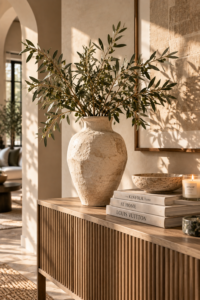
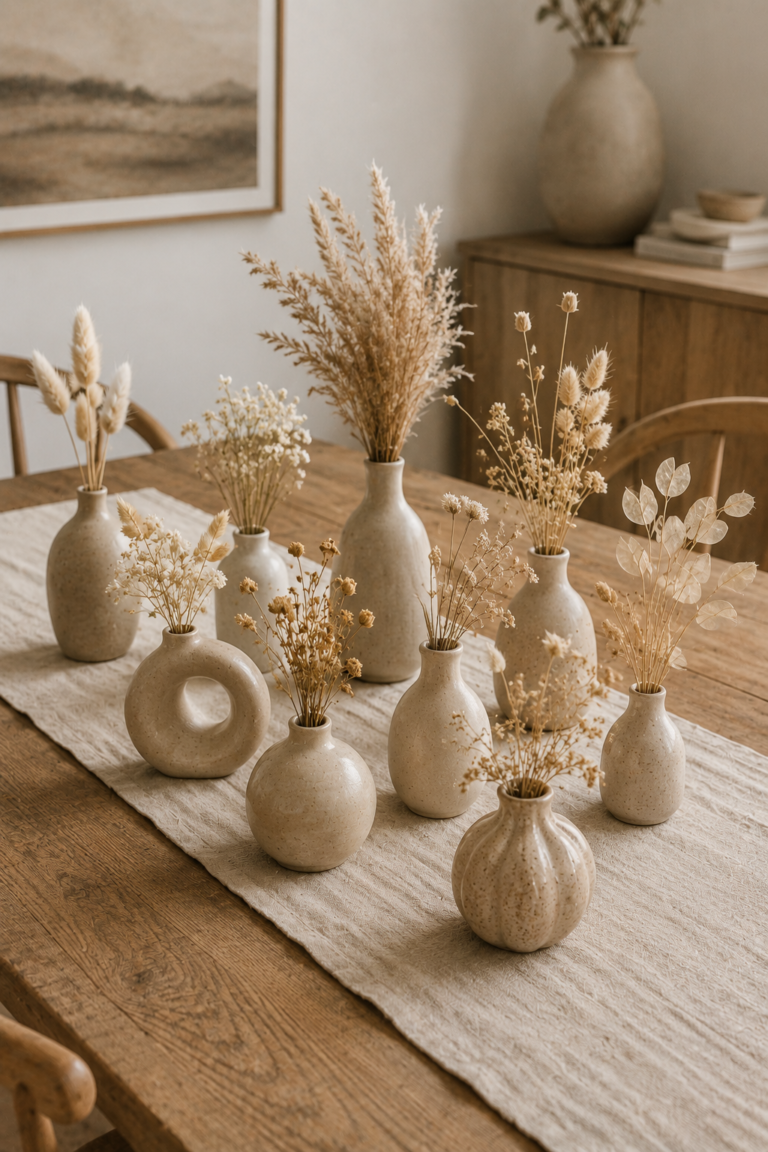
A ceramic vase brings shape, texture, and artisanal character to any room, even when it is displayed without flowers. Handmade, ribbed, speckled, or matte finishes work especially well in modern and transitional interiors. Choose a form that contrasts with nearby furniture, such as a rounded vessel on a linear console or a tall narrow vase beside low accessories. Neutral pottery is versatile, while colored ceramics can introduce a controlled accent.
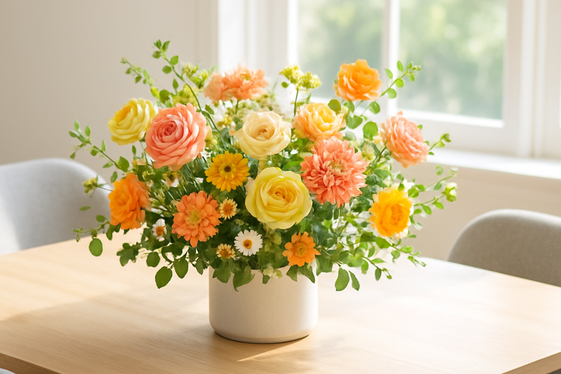
Fill the vase with seasonal branches, eucalyptus, dried grasses, tulips, or a single sculptural stem for a simple arrangement. Scale is important: tall branches need a stable, substantial vessel, while smaller flowers look best in compact shapes. Grouping two or three vases with varied heights can create impact on a mantel or dining table, but leave breathing room between pieces so the display feels elegant rather than cluttered. Fresh water and regular trimming will help flowers remain attractive longer.
8. Stylish Storage Basket
Woven baskets combine attractive texture with practical storage, making them indispensable in a stylish home. Large floor baskets can hold blankets, extra pillows, children’s toys, or magazines, while smaller versions organize shelves, bathrooms, and entryways. Materials such as rattan, seagrass, jute, cane, and woven cotton add natural warmth, especially in rooms dominated by smooth surfaces, painted furniture, glass, or metal. They are especially helpful in family rooms, where everyday essentials need to remain easy to reach.
Choose baskets with sturdy handles and shapes suited to their purpose. A tall basket works well for rolled towels or umbrellas, while a wide low design is better for toys or extra linens. Repeating similar materials throughout the home creates visual continuity, but each basket does not need to match exactly. Keep frequently used items accessible and avoid overfilling, which can make even attractive storage feel messy. Labels can also make closed shelving systems easier for the household to maintain.
9. Framed Art Print
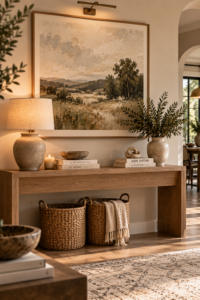
Framed art gives a home identity and transforms blank walls into meaningful focal points. Choose artwork that genuinely appeals to you rather than selecting pieces only because they match the furniture. Abstract prints, landscapes, photography, vintage illustrations, and typography can all work when the scale and framing feel intentional. Large artwork creates impact, while smaller pieces can be arranged as a gallery wall with consistent spacing. Personal photographs or locally sourced works can make the display feel even more distinctive.
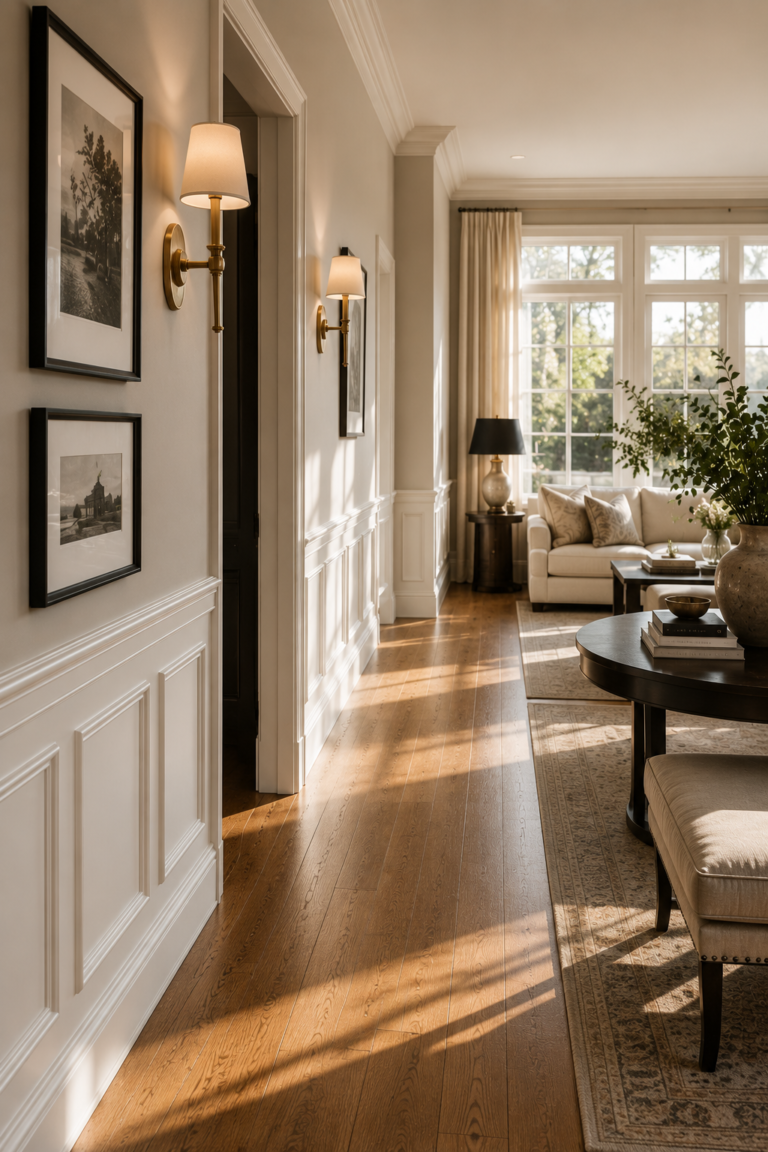
Frames help connect the artwork to the surrounding interior. Natural wood feels warm and relaxed, black frames add crisp definition, and brass or gold finishes introduce elegance. Use generous matting for a polished gallery effect, especially around photography and smaller prints. Hang artwork approximately at eye level and consider the furniture beneath it; a piece above a sofa or console should usually relate clearly to that item’s width. Thoughtful lighting nearby can emphasize the artwork and improve its evening presence.
10. Scented Candle
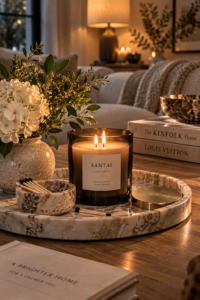
A scented candle adds atmosphere through fragrance, soft light, and decorative appeal. Choose scents that support the mood of each space, such as citrus or herbs in the kitchen, linen or lavender in the bedroom, and amber, sandalwood, or fig in the living room. Attractive glass, ceramic, or metal vessels can remain on display and often look beautiful grouped with books, trays, and small decorative objects. Rotating fragrances throughout the year can also help each season feel distinct and memorable.
Place candles away from drafts, curtains, children, and pets, and always follow basic fire safety. For a polished arrangement, set one candle on a tray with matches, a small vase, or a decorative box. Trim the wick before lighting to reduce smoke and help the wax burn evenly. Flameless candles are a useful alternative in high-traffic areas and can still create a warm evening glow when arranged inside lanterns or glass holders.
11. Decorative Tray
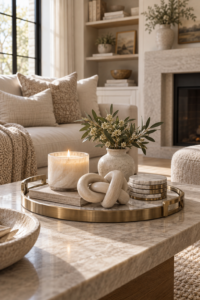
A decorative tray is one of the most useful styling tools because it gathers small objects into a single, organized composition. Use one on a coffee table, ottoman, vanity, kitchen counter, or entryway console to contain candles, coasters, perfume bottles, keys, or seasonal accessories. Materials such as wood, marble, metal, lacquer, and woven rattan can reinforce the room’s overall style while adding another layer of texture. Its defined border immediately makes an assortment of items appear more deliberate and controlled.
Keep the arrangement balanced by combining objects of different heights and shapes. A candle, small vase, and decorative box create an easy three-piece grouping, while a stack of books can raise a smaller item. Leave some open space so the tray remains functional and visually calm. On an ottoman, a sturdy tray also creates a stable surface for drinks, allowing soft upholstered furniture to serve as a practical coffee table.
12. Indoor Plant
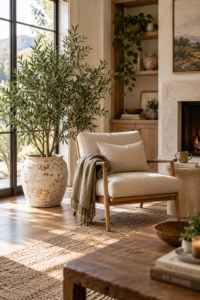
Indoor plants bring color, movement, and life to a room while softening hard architectural lines. A tall fiddle-leaf fig, olive tree, rubber plant, or palm can fill an empty corner, while pothos, snake plants, and small ferns suit shelves and side tables. Select plants according to the available light and your maintenance habits, because a healthy modest plant always looks better than a dramatic one that struggles. One well-placed plant can make a polished interior feel more relaxed and welcoming.
Planters are an important part of the overall design. Choose ceramic, terracotta, woven, stone, or metal containers that complement nearby textures and furniture finishes. Use plant stands to create height or group several plants with different leaf shapes for a layered indoor garden. Faux plants can work in dark spaces, but select realistic varieties and place them where viewers will not inspect them too closely. Dust leaves regularly so both real and artificial greenery continues to look fresh and vibrant.
13. Sculptural Decorative Object
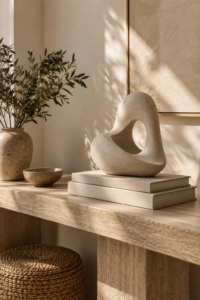
A sculptural object adds dimension and artistic interest to shelves, consoles, and coffee tables. It might be an abstract stone form, carved wooden figure, metal knot, glass object, or handmade ceramic piece. Unlike purely practical accessories, sculpture creates a pause in the room and encourages closer attention. Choose one or two distinctive objects rather than filling every surface with small decorations that compete for focus. Pieces with an interesting silhouette are especially effective against simple walls or open shelving.
Scale and placement determine whether the object feels intentional. A substantial sculpture can stand alone on a pedestal, sideboard, or mantel, while a smaller piece looks stronger when elevated on books. Consider negative space around the object so its silhouette remains visible. Repeating its material elsewhere, such as matching a brass sculpture with lamp hardware or a wooden form with furniture tones, creates subtle unity. Rotate special pieces occasionally to refresh the display without purchasing new decorations.
14. Accent Side Table
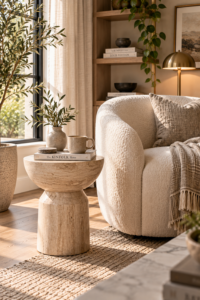
An accent side table provides a convenient surface while introducing shape, color, or material contrast. Use one beside a sofa, armchair, or bed for a drink, book, lamp, or small arrangement. Sculptural pedestal tables, nesting designs, solid wood stools, and slim metal frames can all add character without occupying much floor space. The best choice supports the room’s function while contributing something visually distinctive. It can also balance a seating arrangement by filling an awkward gap without creating visual heaviness.
In smaller homes, select lightweight tables that can move easily between rooms when needed. A compact side table can serve as a plant stand, temporary laptop surface, or extra table for guests. Keep styling restrained so there is still room for practical use. One lamp, coaster, or small vase is often enough. Match the table height closely to the sofa arm or chair seat for comfortable reach. Rounded edges are particularly practical in narrow walkways or homes with young children.
15. Beautiful Window Curtains
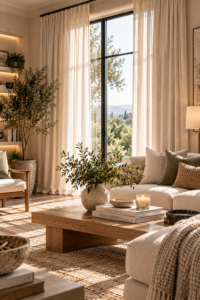
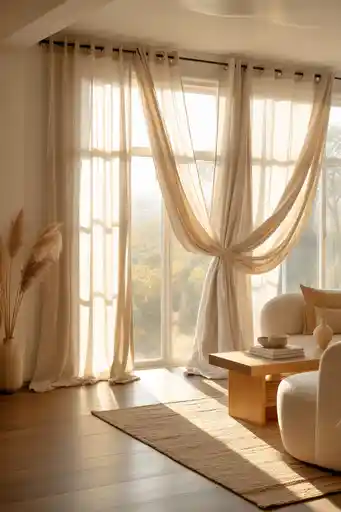
Well-chosen curtains make windows appear taller, soften a room, and control both light and privacy. Hang the curtain rod several inches above the window frame and extend it beyond each side so the panels can open fully. Floor-length curtains usually look more elegant than short panels, especially when they lightly touch or hover just above the floor. Linen blends, cotton, and textured sheers create a relaxed, refined effect. They also help absorb sound, making minimally furnished spaces feel more comfortable.
Select curtain colors that relate to the walls and furnishings without disappearing completely. Soft neutrals keep rooms bright, while deeper shades create drama and intimacy. Layer sheer panels with lined curtains when you need flexible light control. Proper fullness matters, so use enough fabric for generous folds even when the curtains are closed. Steaming or pressing the panels after installation will immediately make the window treatment look more polished. Coordinate the rod with lighting or hardware for a polished detail.
16. Decorative Bowl
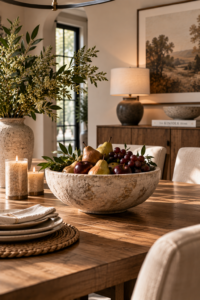
A decorative bowl is simple, versatile, and useful for styling tables, consoles, shelves, and kitchen islands. Choose a material that adds contrast, such as carved wood on marble, ceramic on glass, or metal on a textured table. Large shallow bowls can stand alone as sculptural centerpieces, while smaller designs hold fruit, keys, beads, or collected objects. Their curved shapes also soften rooms filled with straight lines. A distinctive handmade design can become a memorable feature in an otherwise minimal arrangement.
Change the contents seasonally to keep the display interesting. Citrus fruit creates a fresh kitchen accent, pinecones add autumn texture, and decorative ornaments work during holidays. A bowl can also remain empty when its shape or glaze is visually strong. Avoid filling it with unrelated clutter; intentional contents preserve the decorative effect. On dining tables, choose a low bowl so it does not block conversation or sightlines across the room.
17. Full-Length Floor Mirror
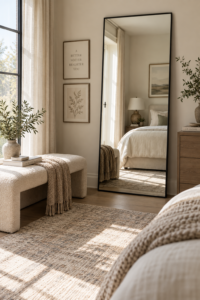
A full-length mirror is both practical and visually powerful, especially in bedrooms, dressing areas, hallways, and small apartments. Tall mirrors reflect more of the room, increase natural light, and make ceilings appear higher. Leaning designs create a relaxed contemporary look, while wall-mounted versions save floor space and feel more permanent. Choose a frame that coordinates with nearby hardware, furniture, or architectural details. It also makes daily outfit planning easier by providing a complete, well-lit view.
Position the mirror where it reflects something attractive, such as a window, artwork, plant, or well-styled corner. Avoid angles that reflect clutter, exposed storage, or harsh lighting. Safety is essential, so secure leaning mirrors to the wall, particularly in homes with children or pets. A small bench, basket, or plant nearby can complete the dressing area without distracting from the mirror’s strong vertical presence. Keep the surrounding floor clear enough to stand back and use the mirror comfortably.
Conclusion
Creating a stylish home becomes easier when you focus on versatile pieces that combine beauty with everyday usefulness. Begin with the items that solve a practical need, then gradually add texture, artwork, lighting, and meaningful accents. You do not need every piece at once or in the same design style. A carefully edited collection, arranged with breathing room and personal intention, will always feel more elegant than a space filled only to follow trends.