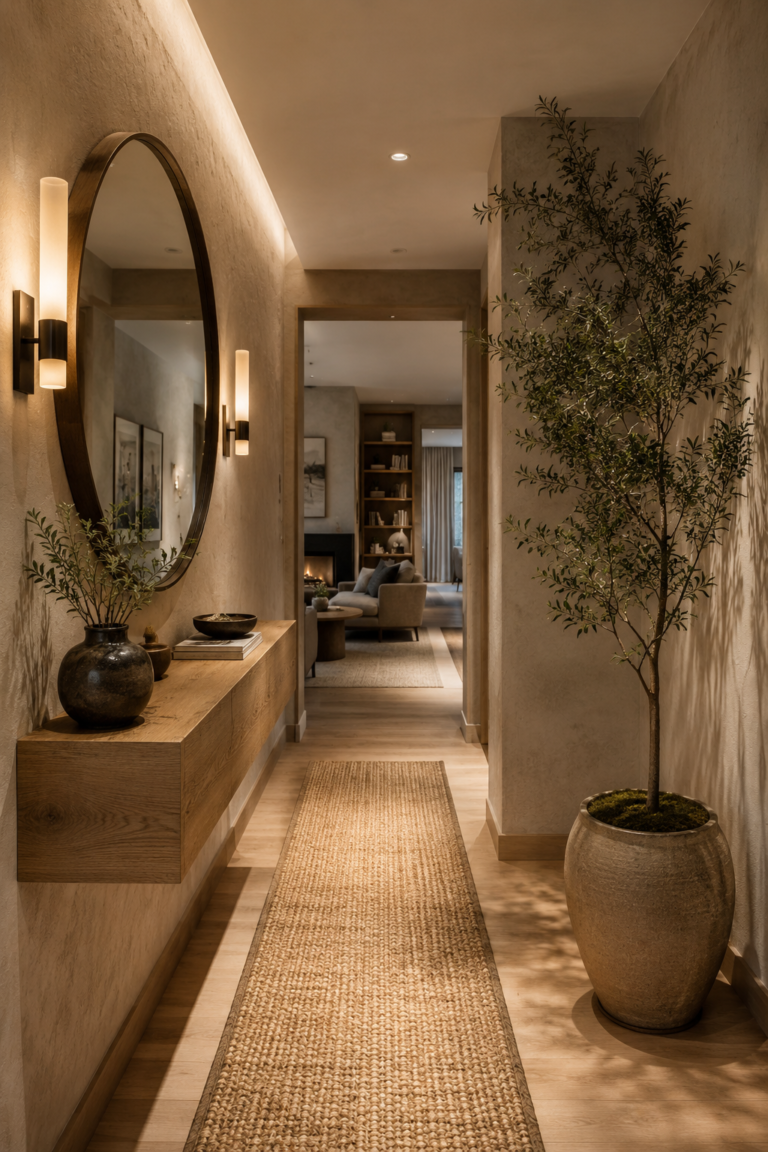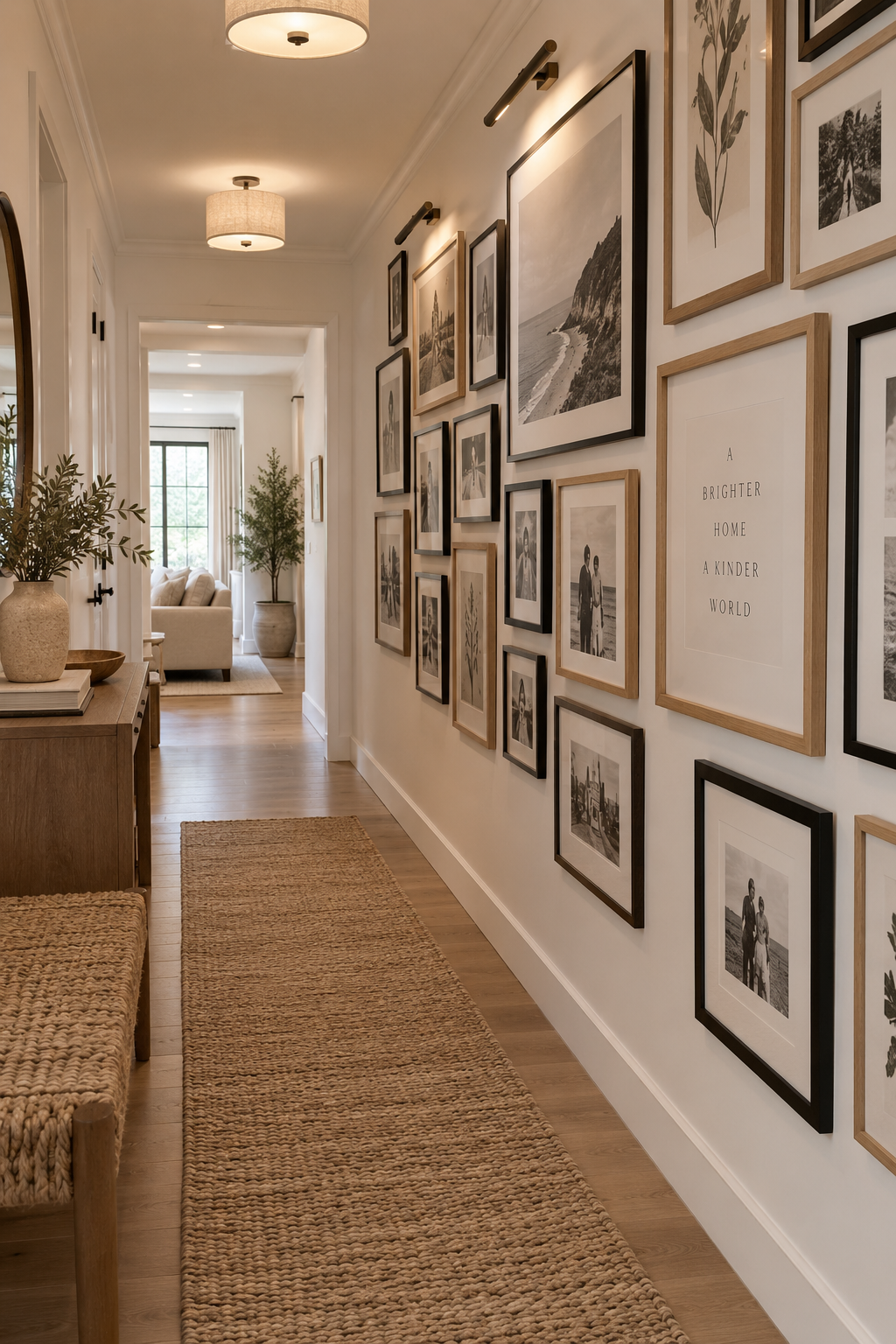
16 Stunning Hallway Ideas That Transform Narrow Spaces
A narrow hallway may seem like a purely practical passage, but with the right design choices, it can become one of the most memorable areas in your home. Thoughtful lighting, clever storage, strategic color, and well-placed decor can visually widen the space while giving it personality. Whether your style is modern, farmhouse, minimalist, or luxurious, these hallway ideas prove that even the smallest transitional spaces can feel polished, welcoming, and beautifully intentional.
The key is to balance visual interest with functionality so the hallway never feels crowded. Slim furniture, reflective surfaces, vertical details, and cohesive color palettes can create depth without sacrificing precious floor space. From gallery walls and statement runners to built-in shelving and dramatic paint treatments, the following ideas offer practical inspiration for transforming a tight corridor into a stylish design feature that deserves just as much attention as any other room.
1. Use an Oversized Mirror to Create Depth
A large mirror is one of the easiest ways to make a narrow hallway feel wider and brighter. Position it opposite a window or light source so it reflects natural illumination throughout the corridor. A frameless design creates a sleek modern effect, while an ornate gold or wood frame introduces character. For an especially dramatic look, choose a floor-length mirror that visually doubles the space and becomes a striking decorative focal point.
Keep the surrounding decor restrained so the mirror remains the star. A slim console, small vase, or single wall sconce can complement it without overwhelming the passage. In very tight hallways, mount the mirror directly on the wall instead of leaning it against the floor. This approach improves circulation while adding depth, elegance, and function, making the area feel more open every time you walk through it. It also offers a convenient final appearance check.
2. Add a Striped Hallway Runner
A striped runner can visually stretch a hallway and guide the eye toward the far end of the space. Longitudinal stripes enhance the corridor’s length, while subtle horizontal patterns can make it appear slightly wider. Select a low-pile rug that allows doors to open easily and stands up to daily foot traffic. Neutral stripes create a refined look, while bold colors bring energy and personality to an otherwise simple passage.
Choose a runner that leaves a narrow border of flooring visible on both sides, as this prevents the hallway from appearing cramped. Coordinate the rug with nearby rooms for a smooth visual transition. Adding a non-slip pad beneath it improves safety and keeps the runner aligned. This simple layer introduces softness, color, and movement while turning a plain walkway into a thoughtfully decorated part of your home. It also helps protect flooring in busy homes.
3. Install Space-Saving Wall Sconces
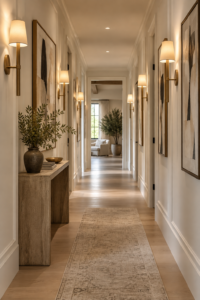
Wall sconces provide stylish illumination without occupying valuable floor or surface space. Install them at regular intervals to create an inviting rhythm and eliminate dark corners. Slim fixtures with upward and downward light can make the walls appear taller, while globe sconces offer soft, diffused brightness. Choose finishes that coordinate with your hardware, such as matte black, aged brass, or polished chrome, for a cohesive and professionally designed appearance. This coordination creates consistency throughout the home.
For hallways without hardwired electrical connections, consider plug-in or rechargeable sconces that provide the same decorative effect with easier installation. Warm bulbs create a cozy atmosphere, while brighter neutral light works well in modern interiors. Pair the sconces with artwork, molding, or a mirror to strengthen the overall composition. Proper lighting instantly makes the corridor feel safer, more spacious, and far more welcoming throughout the day. This upgrade can work without major structural changes.
4. Design a Personal Gallery Wall
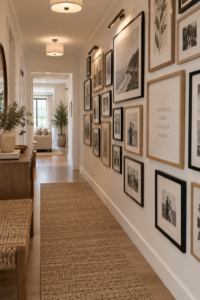
A carefully arranged gallery wall can transform a narrow hallway into a personal and engaging display. Use family photographs, travel prints, botanical illustrations, or abstract artwork to create a collection that reflects your style. Matching frames establish a clean, organized appearance, while mixed finishes produce a relaxed, collected look. Keep the arrangement relatively shallow and align the pieces around a central visual line for balance. A clear visual line keeps the entire arrangement balanced overall.
Before hanging anything, lay the frames on the floor or create paper templates to test the spacing. Maintain consistent gaps so the display feels intentional rather than cluttered. In a very narrow hallway, choose smaller frames and lighter colors to avoid visual heaviness. A gallery wall encourages guests to slow down and notice the details, making the passage feel like a curated destination rather than an overlooked connector. This makes the display feel integrated with the home’s design.
5. Paint the Ceiling a Contrasting Color
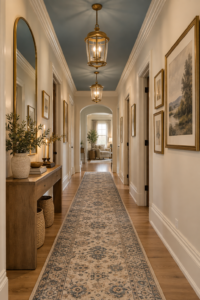
Painting the ceiling in a contrasting shade adds unexpected drama without taking up any physical space. A soft blue, warm beige, muted green, or even deep navy can draw the eye upward and make the hallway feel more designed. Keep the walls lighter if the corridor lacks natural light, allowing the ceiling color to become an elegant accent rather than making the entire area feel enclosed. The result remains visually interesting without cluttering the floor.
This treatment works particularly well in hallways with crown molding, decorative trim, or a series of pendant lights. Repeat the ceiling shade in small accessories, artwork, or the runner to create visual harmony. For a subtle result, choose a color only a few shades darker than the walls. For greater impact, use a saturated tone that creates a jewel-box effect and gives the narrow space a memorable identity. This creates impact without adding decorative clutter.
6. Add a Slim Floating Console
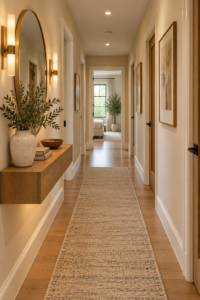
A floating console delivers useful display space while keeping the floor visually clear. Choose a shallow design that projects only a few inches from the wall, making it ideal for keys, mail, or a small decorative arrangement. Because the furniture appears to hover, the hallway feels lighter and less obstructed. A wood shelf introduces warmth, while a painted or stone-topped console can create a more polished contemporary look. This is especially useful in a compact space.
Mount the console at a comfortable height and pair it with a mirror or artwork above. Use only a few carefully selected objects, such as a lamp, ceramic bowl, and vase, to prevent the surface from becoming cluttered. Baskets can be placed underneath if the hallway is wide enough, but leaving the area open often creates the strongest sense of space. The result is functional, minimal, and visually refined. The arrangement stays practical for everyday use.
7. Introduce Vertical Wall Paneling
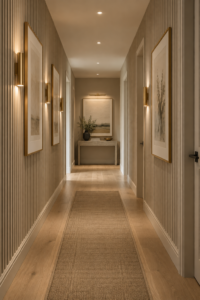
Vertical paneling adds architectural interest and makes a low or narrow hallway appear taller. Slim wood battens, beadboard, or fluted panels create long vertical lines that naturally lift the eye. Paint the treatment in the same color as the walls for a subtle textured effect, or choose a contrasting shade for stronger definition. This upgrade can make even a basic corridor feel custom-built and much more sophisticated. The treatment can suit almost any style of home.
For a balanced design, install paneling on the lower half of the wall and add a simple chair rail above it. Full-height paneling creates a more dramatic modern look, especially when combined with concealed doors or streamlined lighting. Keep decorative objects minimal so the wall texture remains visible. The added depth, shadow, and repetition give the hallway character without requiring bulky furniture or reducing valuable walking space. It works effectively even in the narrowest corridor.
8. Create a Seamless Light Color Palette
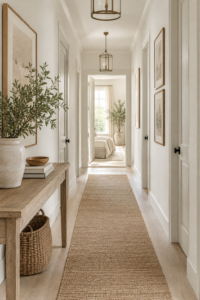
Using one continuous light color across the walls, trim, and doors creates a seamless effect that reduces visual interruptions. Soft white, pale greige, warm cream, or light taupe can reflect more light and make a narrow hallway feel calm and expansive. When every surface blends together, the eye moves smoothly through the space rather than stopping at contrasting edges, helping the corridor appear wider and more cohesive. The consistency extends smoothly from one end to the other.
To prevent the monochromatic palette from feeling flat, introduce texture through a woven runner, ribbed wall treatment, framed art, or natural wood accents. Select a durable satin or eggshell finish that can withstand marks in a high-traffic area. Matching the door color to the walls is particularly effective because it minimizes visual clutter. The overall result feels clean, airy, and intentionally designed rather than plain or unfinished. This durability is valuable in the busiest parts of your home.
9. Choose Statement Ceiling Lighting
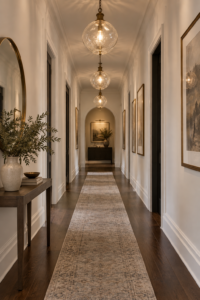
A statement pendant or series of small ceiling lights can turn a narrow hallway into a dramatic design moment. Choose fixtures that are visually interesting but compact enough to maintain comfortable headroom. Lanterns, sculptural globes, or minimalist cylinders can create rhythm and guide the eye down the corridor. In a long hallway, repeating the same fixture at even intervals produces a polished, architectural effect that feels both practical and luxurious.
Consider ceiling height before selecting the fixture. Flush or semi-flush designs work best in lower spaces, while higher ceilings can accommodate pendants with longer drops. Use dimmable bulbs to adjust the atmosphere from bright and functional to soft and inviting. Coordinate the metal finish with door handles or picture frames for consistency. Thoughtful overhead lighting gives the hallway a strong identity without adding furniture or consuming floor space. This completes the corridor in a clean, practical way.
10. Build Recessed Wall Niches
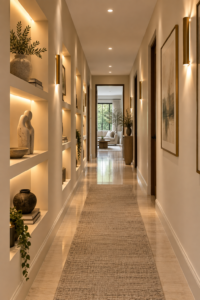
Built-in wall niches provide display space without narrowing the walking path. Recessed shelves can hold books, small sculptures, candles, or framed photographs while maintaining a clean silhouette. Add integrated lighting inside the niches to highlight the objects and create depth. Even one well-positioned recess can make a simple hallway feel architecturally considered, especially when its interior is painted in a contrasting color or lined with decorative wallpaper. This adds function with minimal visual clutter.
Keep the styling edited and avoid filling every shelf. A few carefully chosen pieces will appear more luxurious and prevent the corridor from feeling busy. Rounded niches create a soft Mediterranean influence, while sharp rectangular openings suit modern interiors. When construction allows, align the recesses with doorways or lighting fixtures for visual order. This solution combines storage, decoration, and architectural character while preserving every inch of usable floor area. The hallway becomes useful in a beautifully efficient way.
11. Embrace a Moody Dark Color
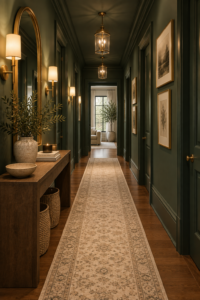
Dark paint can make a narrow hallway feel intentional, cozy, and surprisingly sophisticated. Deep charcoal, forest green, navy, or chocolate brown creates a cocooning effect that turns the corridor into a dramatic transition between rooms. Instead of fighting the limited size, this approach embraces it. Use the same color on walls, trim, and doors for a seamless look, then add warm lighting to reveal depth and richness. The color itself provides impact without requiring extra decoration.
Balance the dark palette with reflective or lighter elements, such as brass sconces, pale artwork, a vintage mirror, or a cream runner. Glossy accents and strategically placed lighting prevent the space from feeling gloomy. This concept is especially effective in hallways without windows, where attempting to imitate bright natural light may feel unsuccessful. A moody color scheme creates atmosphere and gives the passage a strong, memorable design personality. The atmosphere remains appealing throughout every season.
12. Include a Narrow Hallway Bench
A narrow bench can add convenience and charm to a hallway without dominating the space. Select a backless or wall-mounted design with a shallow depth, allowing people to sit while putting on shoes or placing a bag. Upholstery introduces softness, while a simple wood bench gives the corridor warmth and natural texture. In an entry hallway, choose a model with hidden storage to keep everyday items neatly concealed. This feature is especially convenient near the front door.
Style the bench with one small cushion or folded throw rather than multiple accessories that could crowd the walkway. Hooks or a slim shelf above can create a compact organization zone, but ensure there is enough clearance for comfortable movement. If the hallway is extremely tight, a floating bench keeps the floor visible and enhances the sense of openness. This practical feature makes the space feel purposeful, welcoming, and complete.
13. Decorate With Statement Wallpaper
Image Prompt: A charming narrow hallway with elegant botanical wallpaper above painted wall paneling, a neutral runner, brass wall sconces, pale wood flooring, sophisticated English-inspired decor, realistic vertical interior photography, Pinterest aesthetic.
Wallpaper can turn a narrow hallway into a bold and memorable design feature. Small-scale botanical prints, subtle geometrics, soft stripes, or textured grasscloth add depth and personality without requiring furniture. In a short corridor, cover every wall for an immersive effect. In a longer hallway, use wallpaper on one accent wall or above paneling to create interest while keeping the overall look balanced and visually comfortable. The pattern can add character without overwhelming the passage.
Choose a pattern that complements the scale of the space. Large dramatic motifs can feel luxurious when used confidently, while delicate prints create a softer, more open appearance. Washable wallpaper is practical for busy family homes because hallways are prone to marks. Coordinate the pattern with the runner and lighting fixtures, but avoid matching everything too closely. The layered result feels curated, expressive, and suitable for Pinterest-worthy interiors. This gives the corridor lasting decorative appeal.
14. Create a Focal Point at the End
Image Prompt: A long narrow hallway leading toward a dramatic oversized painting above a slim pedestal table, focused picture light, neutral walls, warm wooden floor, elegant runner, sophisticated interior styling, realistic vertical Pinterest photography.
Placing artwork or a striking console display at the end of a hallway creates a clear focal point and gives the eye a destination. This technique makes a long, narrow corridor feel intentional rather than endless. Consider a large painting, sculptural vase, statement mirror, or small pedestal table. The focal element should be visible from the entrance and proportioned to the end wall without blocking nearby doors. It should not interfere with nearby circulation routes.
Enhance the feature with a picture light, recessed spotlight, or pendant centered above it. A darker paint color or wallpaper panel behind the display can add depth and distinction. Keep the side walls relatively simple so attention naturally moves toward the end. By emphasizing a strong visual destination, the hallway gains structure, balance, and personality, transforming an awkward passage into a composed and elegant architectural experience. The result feels composed and thoughtfully finished.
15. Paint Doors and Trim in a Bold Color
Image Prompt: A narrow hallway with soft cream walls and contrasting muted blue doors and trim, patterned neutral runner, minimal artwork, brass hardware, bright natural light, elegant traditional-modern interior, realistic vertical photography, Pinterest-ready composition.
Painting the doors and trim in a bold contrasting color creates rhythm and character along a narrow hallway. Deep green, black, terracotta, or muted blue can frame each doorway and add definition against lighter walls. This idea works especially well in older homes with decorative molding, but it can also sharpen a simple modern corridor. Repeating the accent color throughout the space makes the design feel cohesive and deliberately planned.
For a softer effect, choose a contrast only a few tones darker than the wall color. Pair stronger shades with simple artwork and a neutral runner so the hallway does not become visually overwhelming. A satin finish on doors and trim adds subtle sheen and improves durability in high-traffic areas. This approach introduces color without reducing brightness, and it highlights architectural details that might otherwise disappear into the background. This creates continuity throughout the entire corridor.
16. Add Seamless Concealed Storage
Image Prompt: A sleek narrow hallway with floor-to-ceiling concealed cabinets painted the same warm white as the walls, push-latch doors, subtle vertical grooves, minimalist runner, recessed lighting, modern organized interior, realistic vertical 2:3 Pinterest photography.
A minimalist hallway with concealed storage keeps a narrow space calm, functional, and visually uncluttered. Floor-to-ceiling cabinets can be built flush with the wall and painted in the same color, allowing coats, shoes, cleaning supplies, or household items to disappear behind seamless doors. Push-latch hardware eliminates protruding handles, while vertical grooves can disguise the cabinet lines and add subtle architectural texture. The design preserves everyday practicality and clean visual flow throughout.
Use only the depth required for the items being stored so the cabinetry does not unnecessarily reduce the walkway. Internal hooks, adjustable shelves, and pull-out compartments make the storage more efficient. Add a simple runner and streamlined lighting to maintain the minimalist look. By combining organization with a quiet, integrated design, concealed cabinets transform the hallway into a highly practical area that still feels spacious, polished, and serene. This supports a beautifully organized everyday routine.